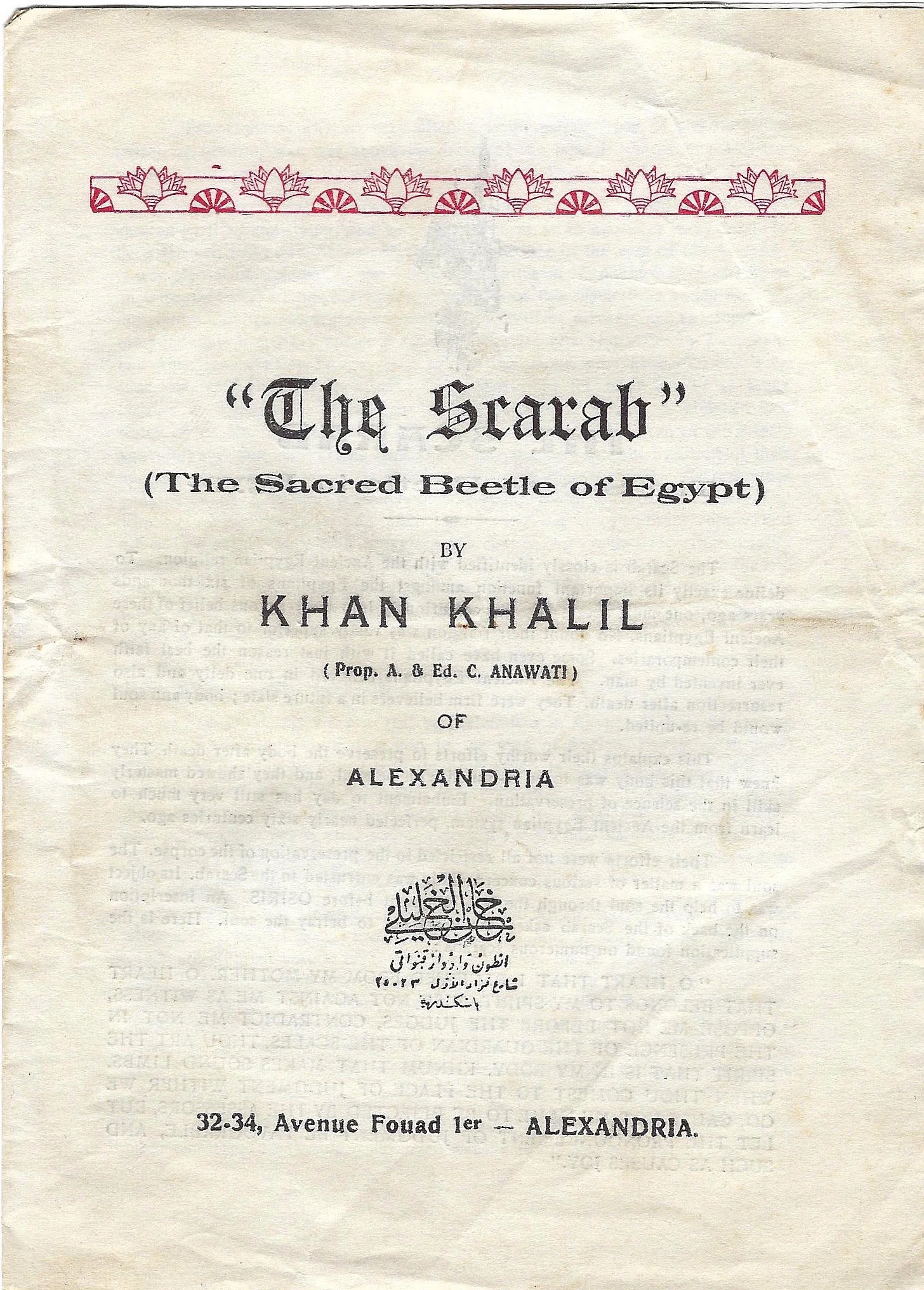
A. & Ed. C. Anawati: 32-34, Avenue Fouade, 1st, Alexandria. Egypt. Circa 1900.
3 circulars, “How to Buy Oriental Curios with Pleasure and Security;” “‘The Scarab’ (The Sacred Beetle of Egypt);” “Embalment (The Ancient Egyptian Art that baffles modern science).” 1 staple-bound pamphlet, “A Very Short List of Presents…” Pamphlet 8 pgs., circulars each 3–4 pgs. Text/illus. printed via letterpress. CONDITION: All very good, some creasing to margins, horizontal fold to all, minimal offsetting, text clear and clean.
An evocative collection documenting a Greek-owned business in Alexandria, advertising their wares, services, and Western-style business practices to Anglophone customers.
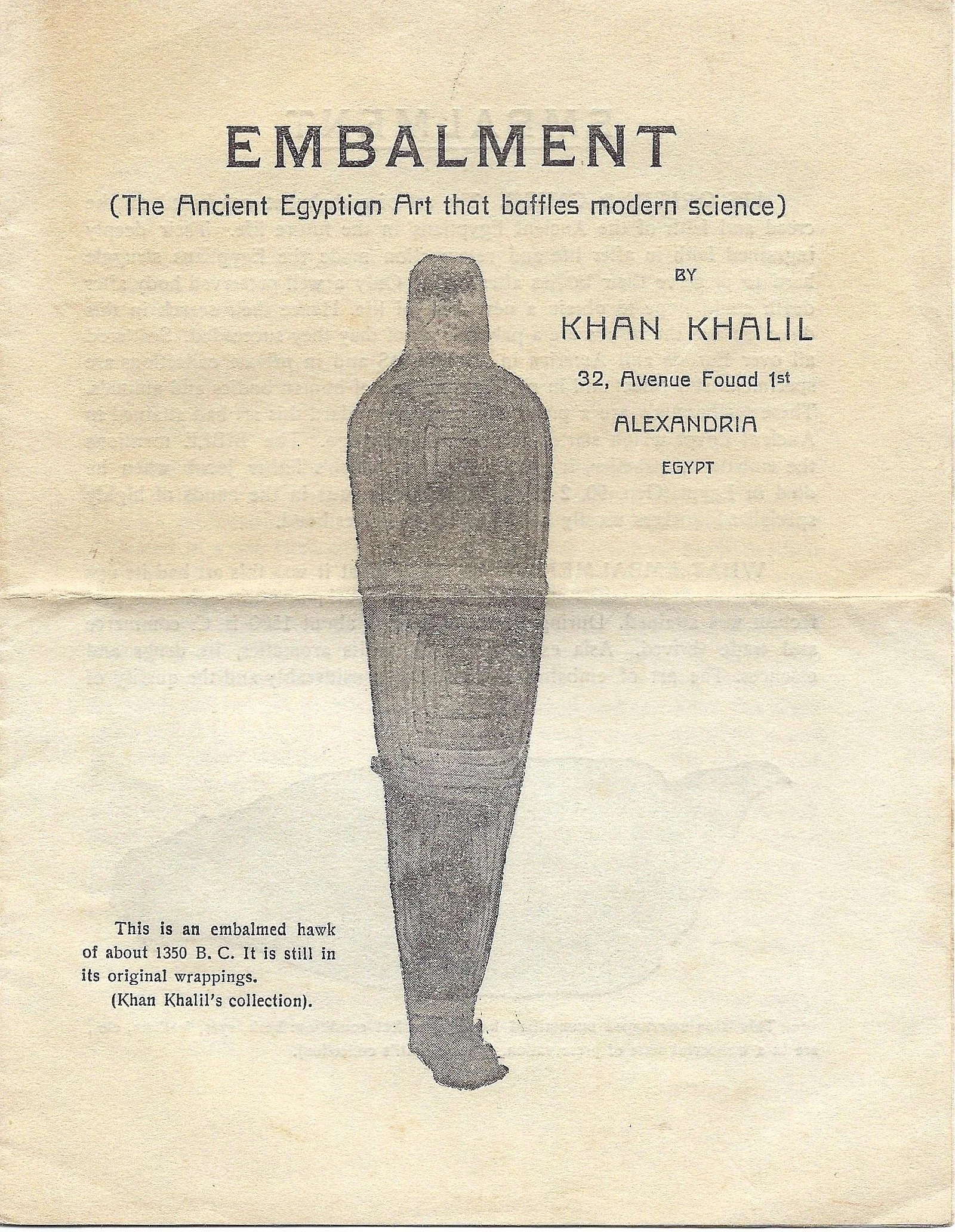
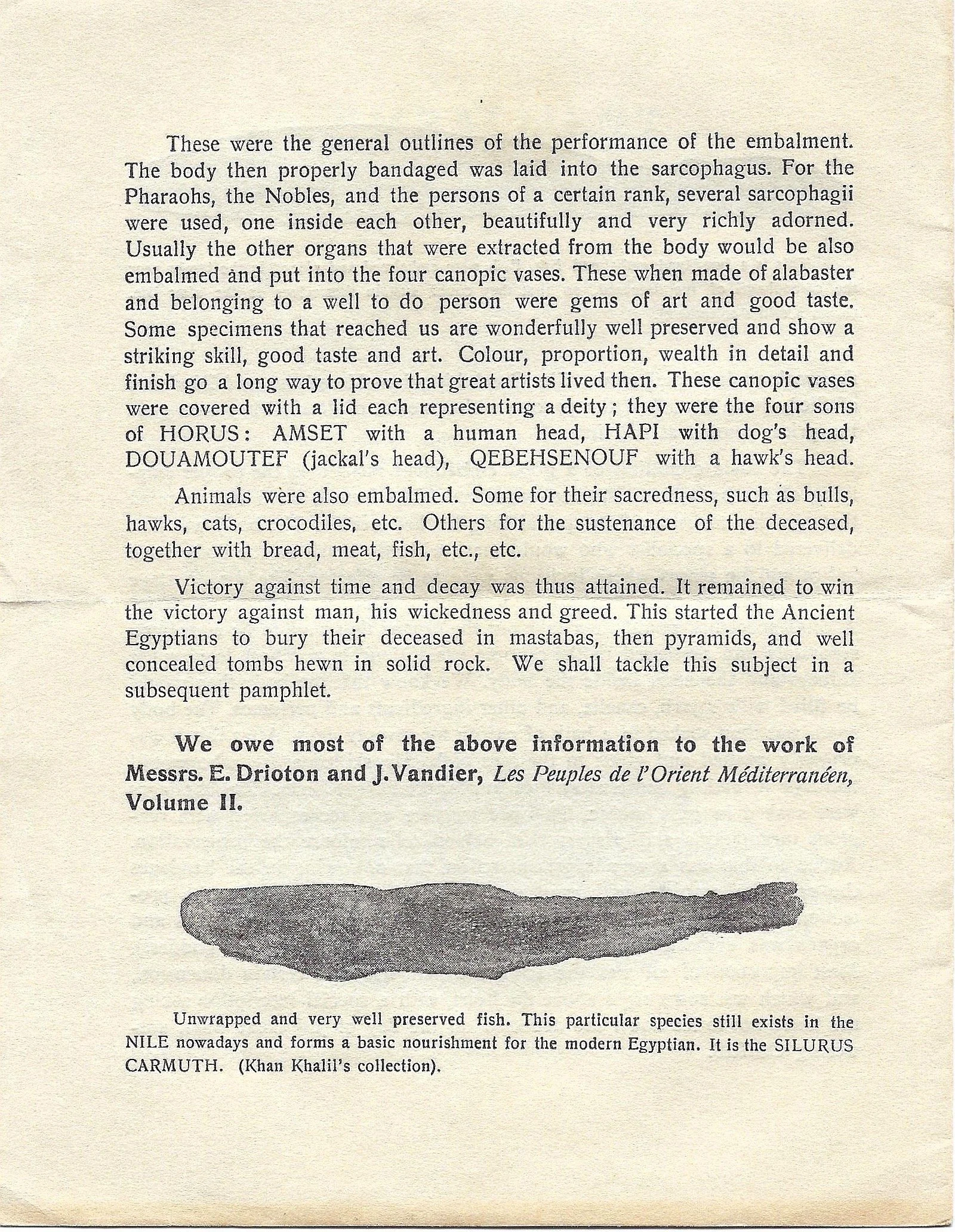
The circular on “Embalment (the Ancient Egyptian Art that baffles modern science)” appears to be a work of exotic advertising not for a specific good, but to create an image of Egypt as a land of sophistication and genius to Anglophone customers. With four illustrations, the text is largely drawn from “the work of Messrs. E. Drioton and J. Vandier, Les Peuples de l’Orient Méditerranéen, volume II,” and describes the methods and ceremonies pertaining to the persons and animals who would be embalmed.
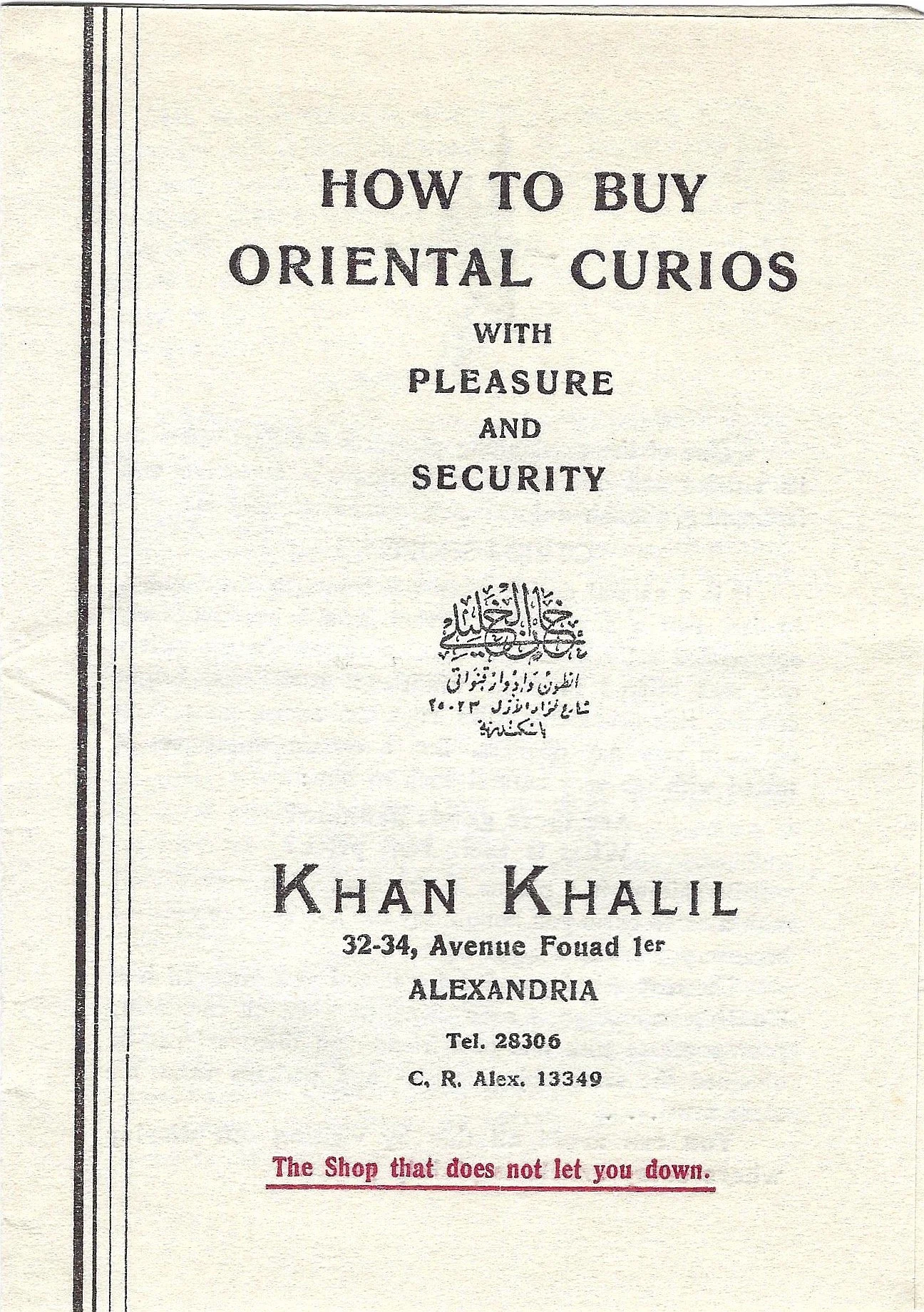
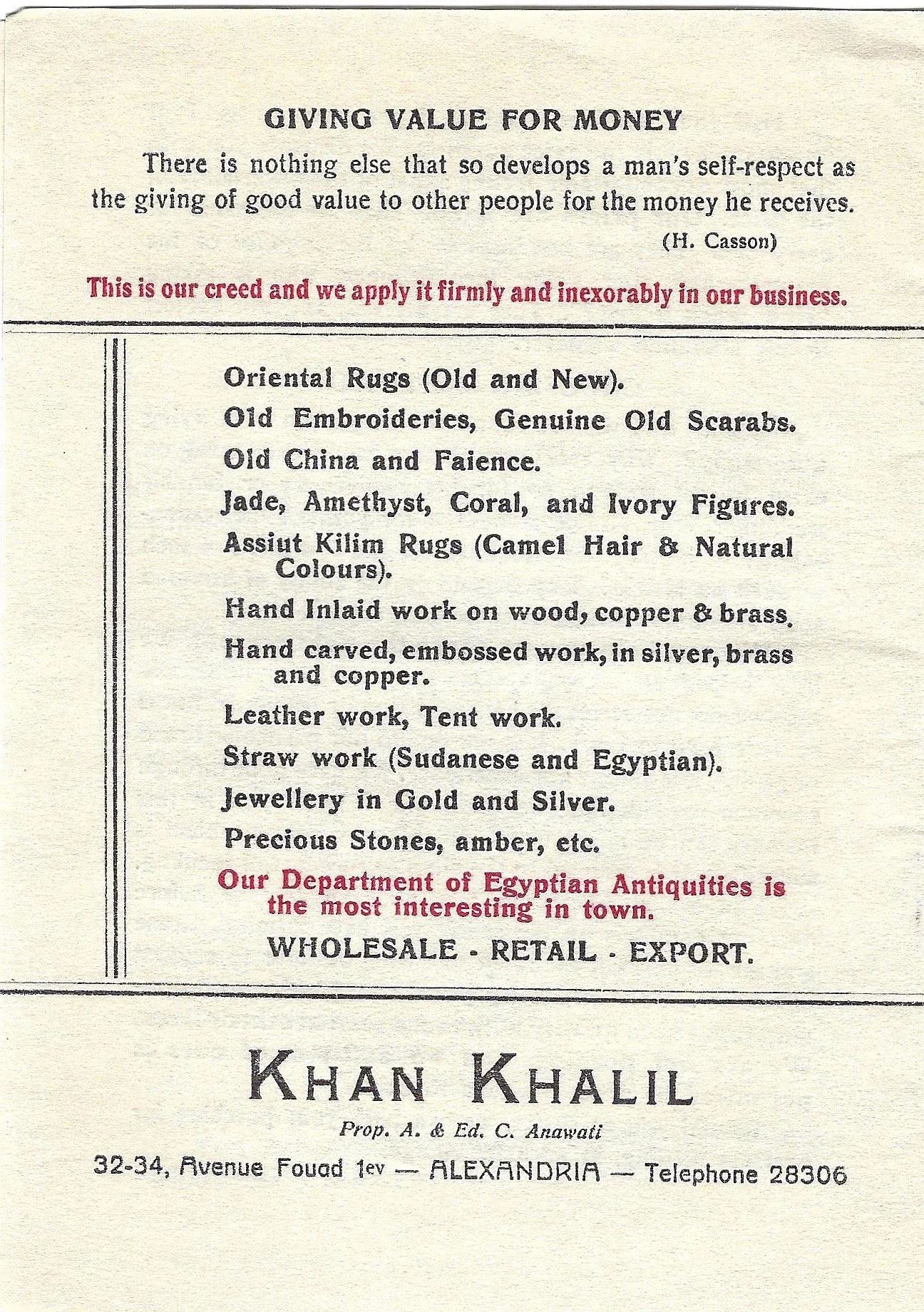
The pamphlet on “How to Buy Oriental Curios with Pleasure and Security” is effectively a salespitch for “curios shopping…that…would be immensely appreciated at HOME,” i.e., in England, Europe, and America. Unlike other businesses catering to Arabic-speaking clients, the proprietors here claim that “bargaining is a plague in the East. You may get off with a small curio you bought…for 7/-. You are satisfied because you thought you made a good bargain…this impression is soon dispelled when on comparing…with…a friend you discover that he obtained the same object for 5/-…from the same man.” To avoid this kerfluffle, all the curios in the Anawati’s shop are “plainly priced” for all to see.
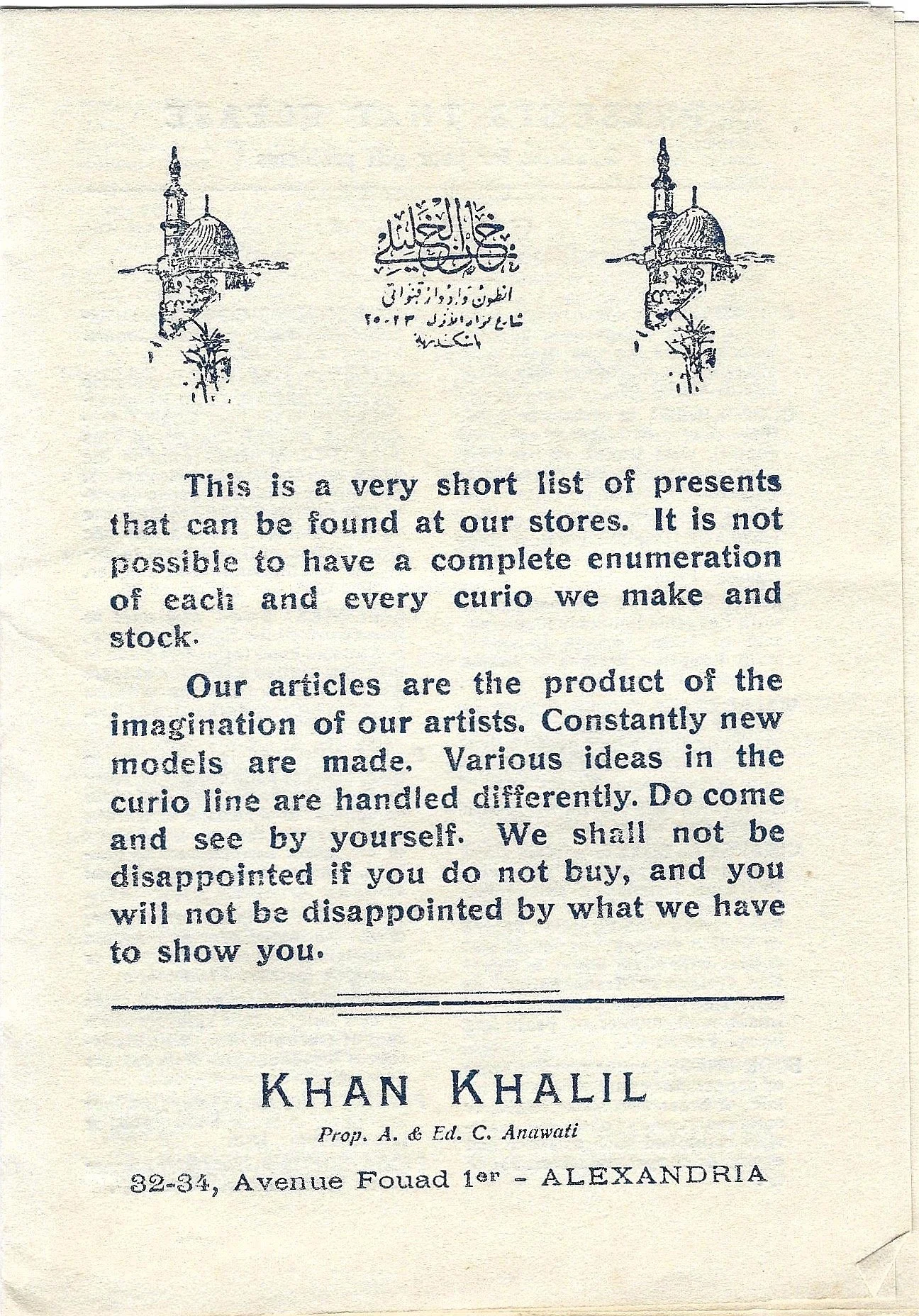
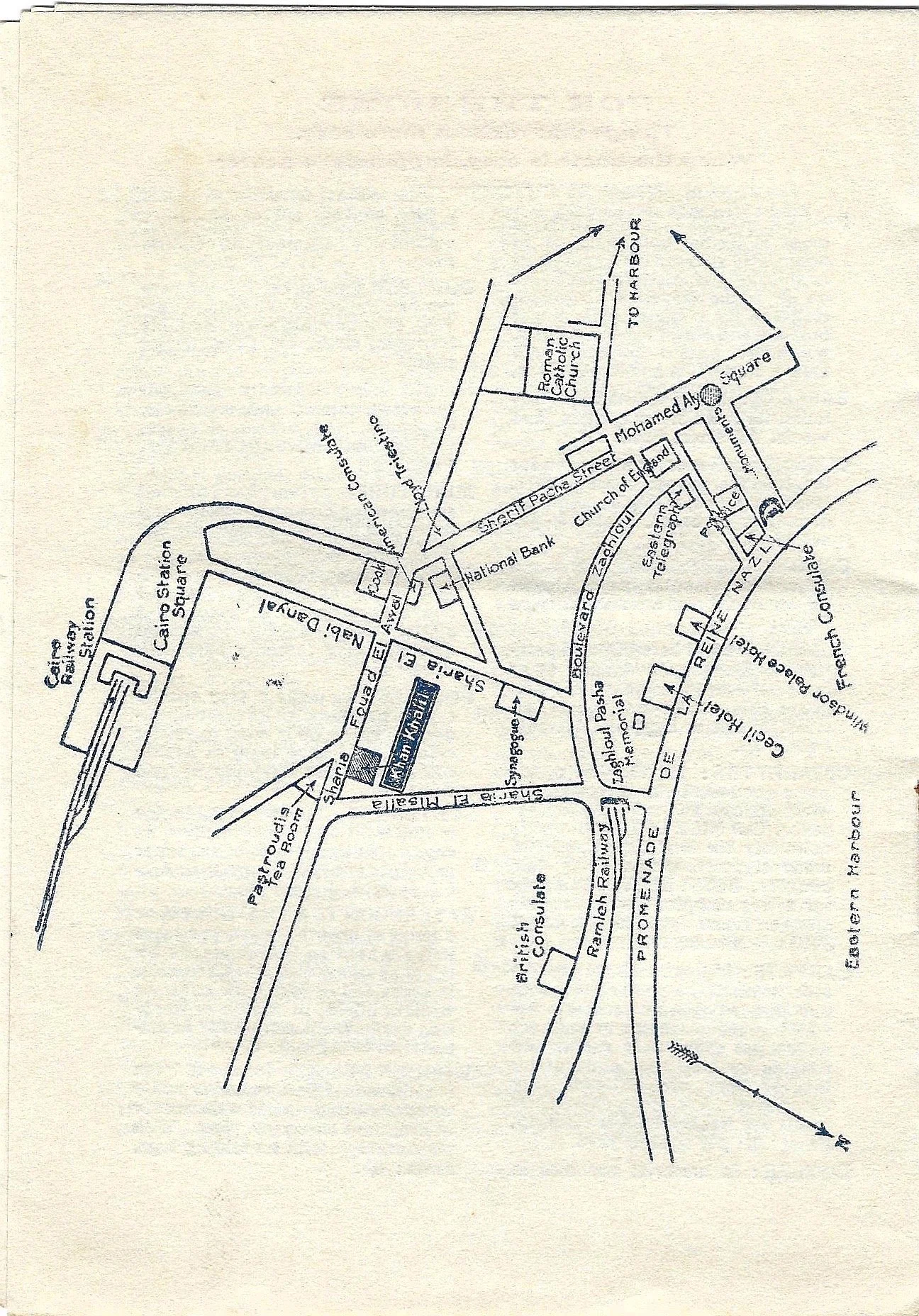
The “very short list of presents” available in the Anawati’s store provides a descriptive list of “things that men buy for their own use…gifts that gladden the feminine heart…gifts that [Boys] like and always use…the practical thing that pleases [Girls]…[and] things that make [The Home] more cosy.” Of note are the jewelry and adornments for women; the Turkish, Egyptian, and Bedouin goods for boys; and the carpets for the home. There is a map printed at the rear locating the shop in the Khan Khalil business district.
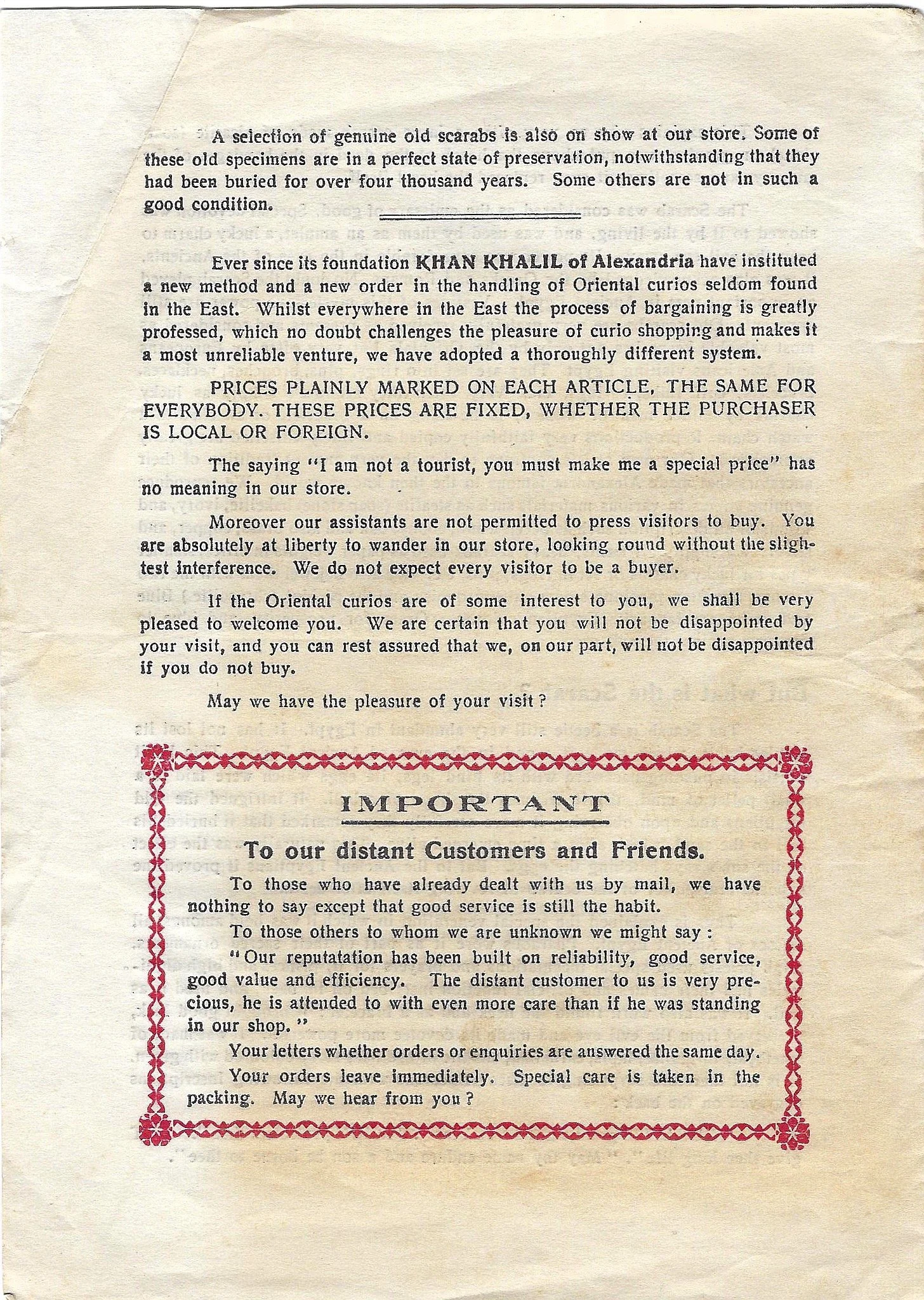
The circular on “the Scarab, (the Sacred Beetle of Egypt)” is an advertisement for “a selection of genuine old scarabs…on show” at the Anawati’s curio store. The proprietors claim that “some of these old specimens are in a perfect state of preservation, notwithstanding that they had been buried for over four thousand years…others are not in such a good condition.” The authenticity of their scarabs notwithstanding, the Anawati’s advertise their “PRICES PLAINLY MARKED ON EACH ARTICLE, THE SAME FOR EVERYBODY. THESE PRICES ARE FIXED, WHETHER THE PURCHASER IS LOCAL OR FOREIGN.”
A. & Ed. C. Anawati: 32-34, Avenue Fouade, 1st, Alexandria. Egypt. Circa 1900.
3 circulars, “How to Buy Oriental Curios with Pleasure and Security;” “‘The Scarab’ (The Sacred Beetle of Egypt);” “Embalment (The Ancient Egyptian Art that baffles modern science).” 1 staple-bound pamphlet, “A Very Short List of Presents…” Pamphlet 8 pgs., circulars each 3–4 pgs. Text/illus. printed via letterpress. CONDITION: All very good, some creasing to margins, horizontal fold to all, minimal offsetting, text clear and clean.
An evocative collection documenting a Greek-owned business in Alexandria, advertising their wares, services, and Western-style business practices to Anglophone customers.
The circular on “Embalment (the Ancient Egyptian Art that baffles modern science)” appears to be a work of exotic advertising not for a specific good, but to create an image of Egypt as a land of sophistication and genius to Anglophone customers. With four illustrations, the text is largely drawn from “the work of Messrs. E. Drioton and J. Vandier, Les Peuples de l’Orient Méditerranéen, volume II,” and describes the methods and ceremonies pertaining to the persons and animals who would be embalmed.
The pamphlet on “How to Buy Oriental Curios with Pleasure and Security” is effectively a salespitch for “curios shopping…that…would be immensely appreciated at HOME,” i.e., in England, Europe, and America. Unlike other businesses catering to Arabic-speaking clients, the proprietors here claim that “bargaining is a plague in the East. You may get off with a small curio you bought…for 7/-. You are satisfied because you thought you made a good bargain…this impression is soon dispelled when on comparing…with…a friend you discover that he obtained the same object for 5/-…from the same man.” To avoid this kerfluffle, all the curios in the Anawati’s shop are “plainly priced” for all to see.
The “very short list of presents” available in the Anawati’s store provides a descriptive list of “things that men buy for their own use…gifts that gladden the feminine heart…gifts that [Boys] like and always use…the practical thing that pleases [Girls]…[and] things that make [The Home] more cosy.” Of note are the jewelry and adornments for women; the Turkish, Egyptian, and Bedouin goods for boys; and the carpets for the home. There is a map printed at the rear locating the shop in the Khan Khalil business district.
The circular on “the Scarab, (the Sacred Beetle of Egypt)” is an advertisement for “a selection of genuine old scarabs…on show” at the Anawati’s curio store. The proprietors claim that “some of these old specimens are in a perfect state of preservation, notwithstanding that they had been buried for over four thousand years…others are not in such a good condition.” The authenticity of their scarabs notwithstanding, the Anawati’s advertise their “PRICES PLAINLY MARKED ON EACH ARTICLE, THE SAME FOR EVERYBODY. THESE PRICES ARE FIXED, WHETHER THE PURCHASER IS LOCAL OR FOREIGN.”
![[Africa! Lecture by Major R. T. Browne]. The Great Southern Ptg. and Mfg. Co.: Frederick, Maryland. 1891.](https://images.squarespace-cdn.com/content/v1/687efeb0f3827b1e917a0b60/c24f7ef3-0262-4055-9bbf-8fd734e7c2ba/BrowneAfricaStreotipconBroadside.jpg)
![Anup Singh India: Facts in Brief [with letter of provenance].](https://images.squarespace-cdn.com/content/v1/687efeb0f3827b1e917a0b60/34e3f97a-6da0-424f-aac9-2091d3cc9307/SinghIndiaFactsBriefC2.jpeg)