Printed in England and South Africa. Circa 1920.
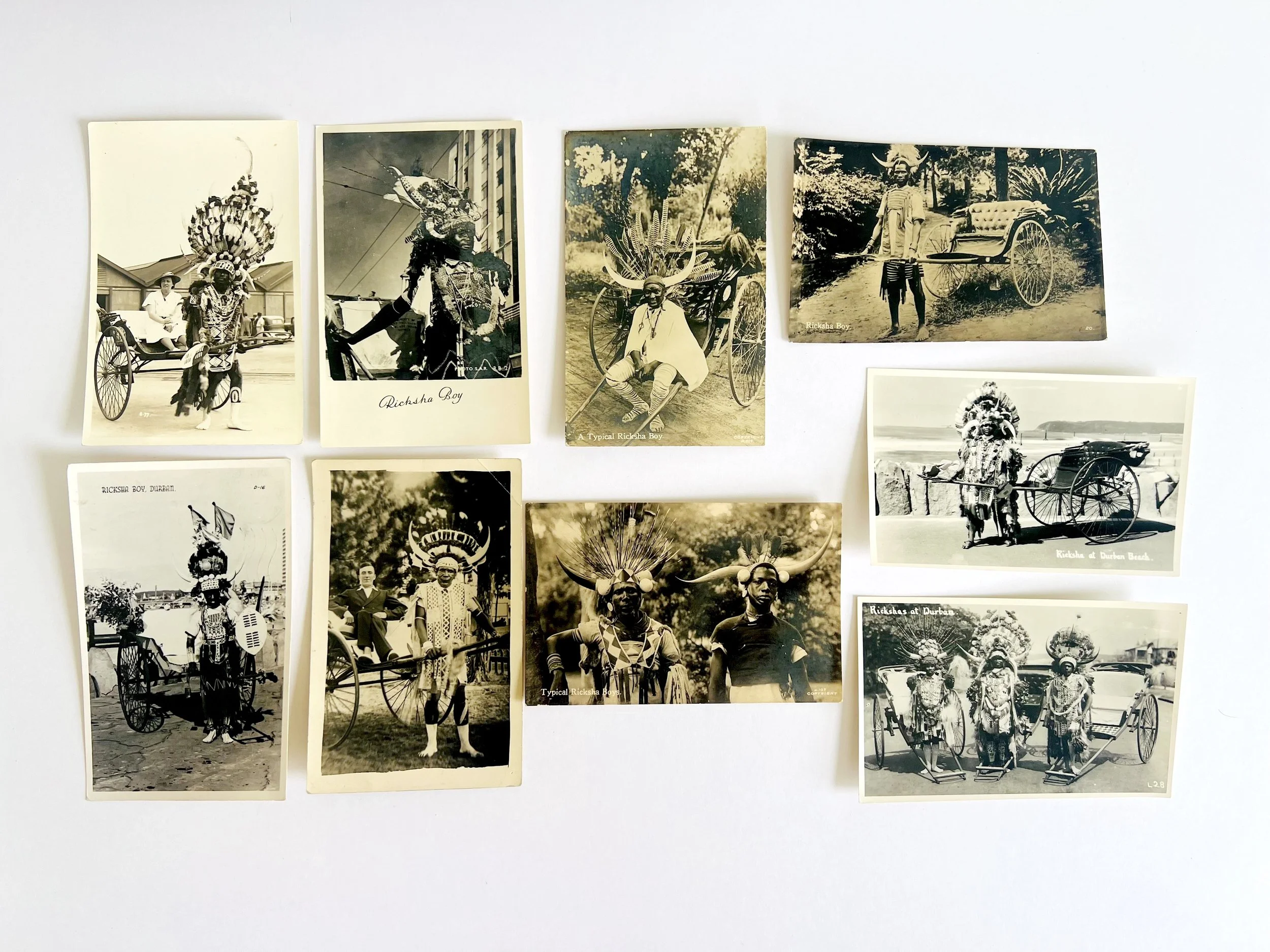
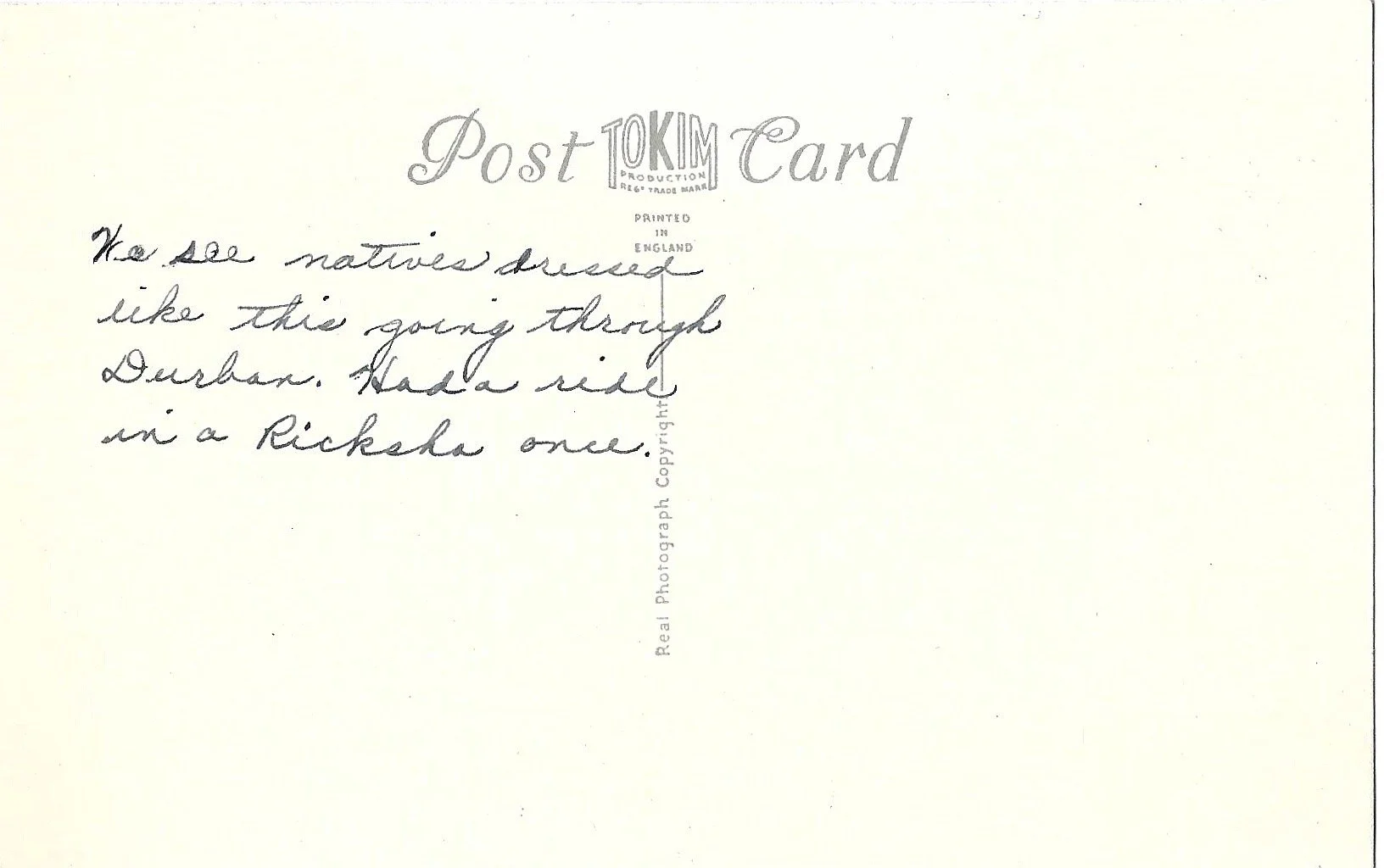
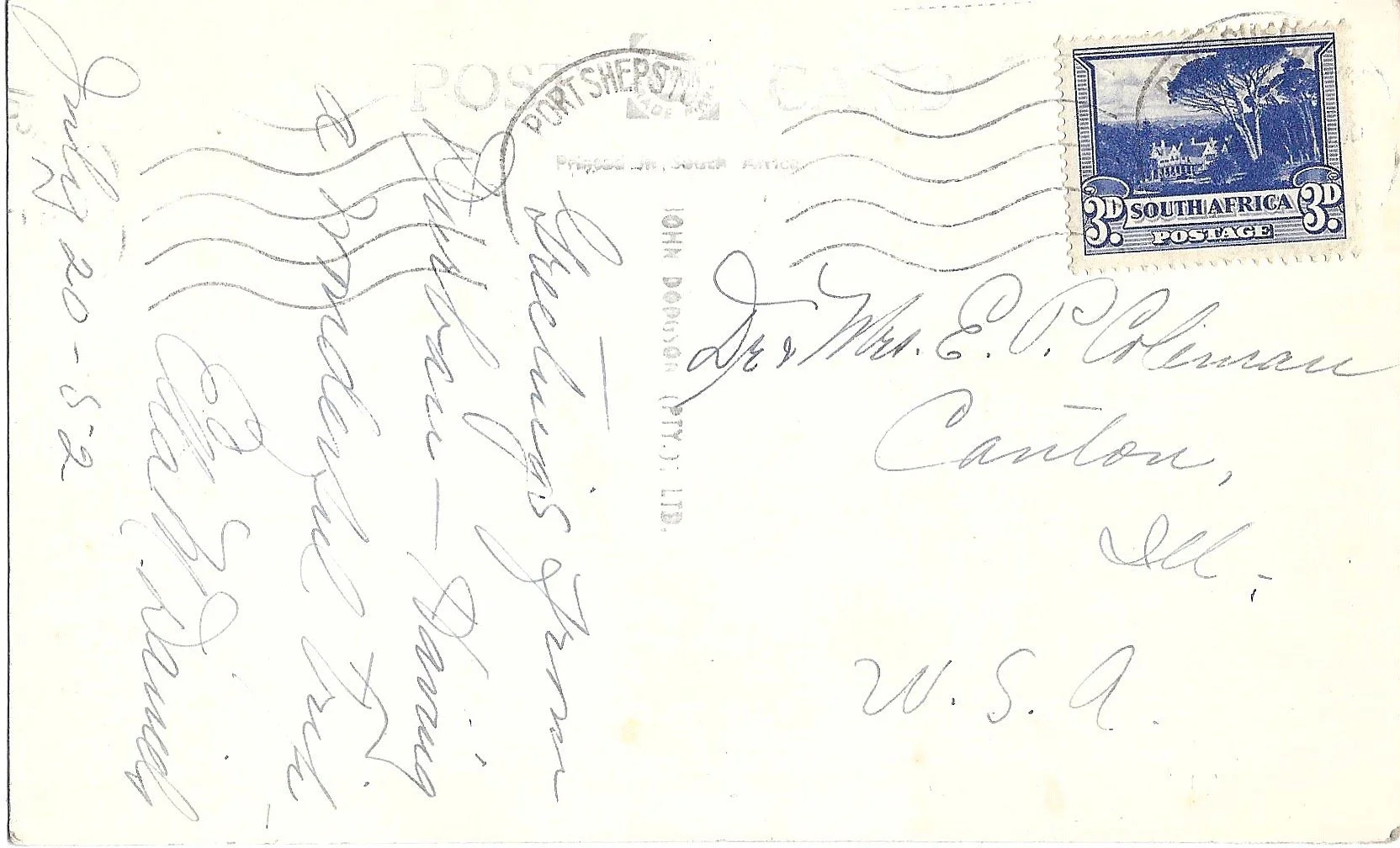
9 real-photo postcards, measuring approx. 5.5” x 3.5”. 2 captioned in ink at versos, rest apparently unused. CONDITION: Very good, some silvering to images at edges, minimal toning, all cards slightly curled. worn by stoic carriage-pullers.
An evocative representation of the use of Asian transportation devices among the British in early twentieth century South Africa.
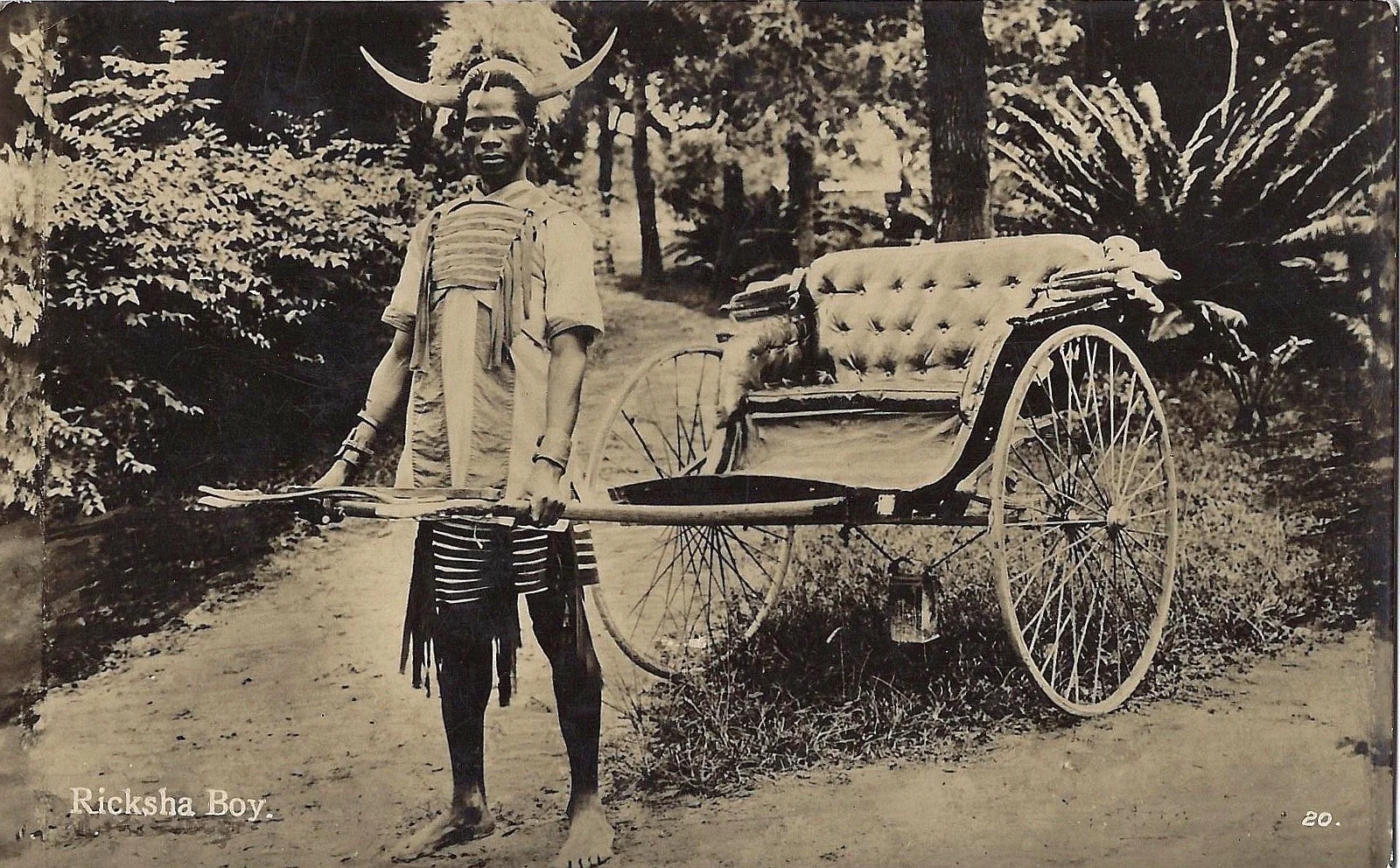
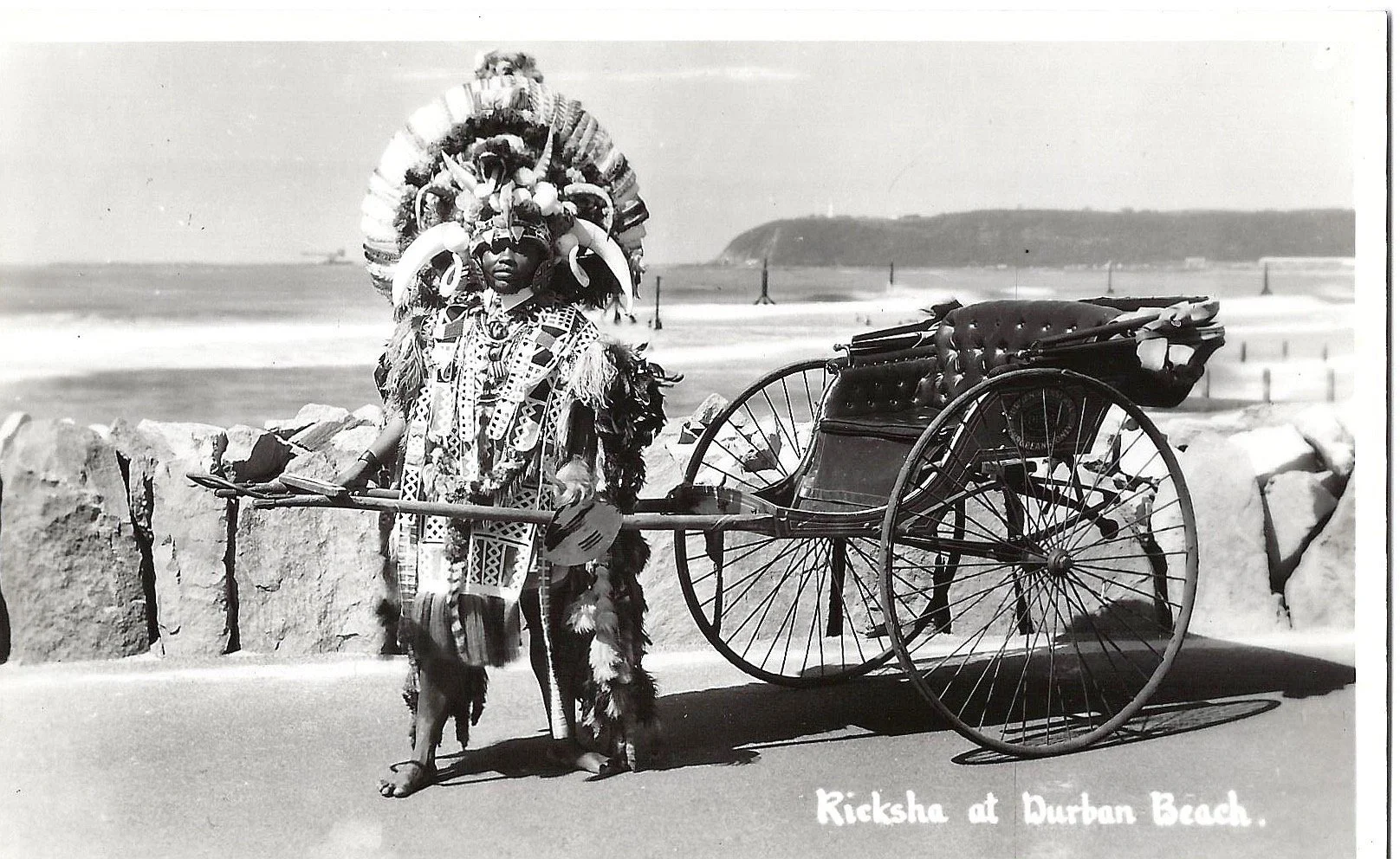
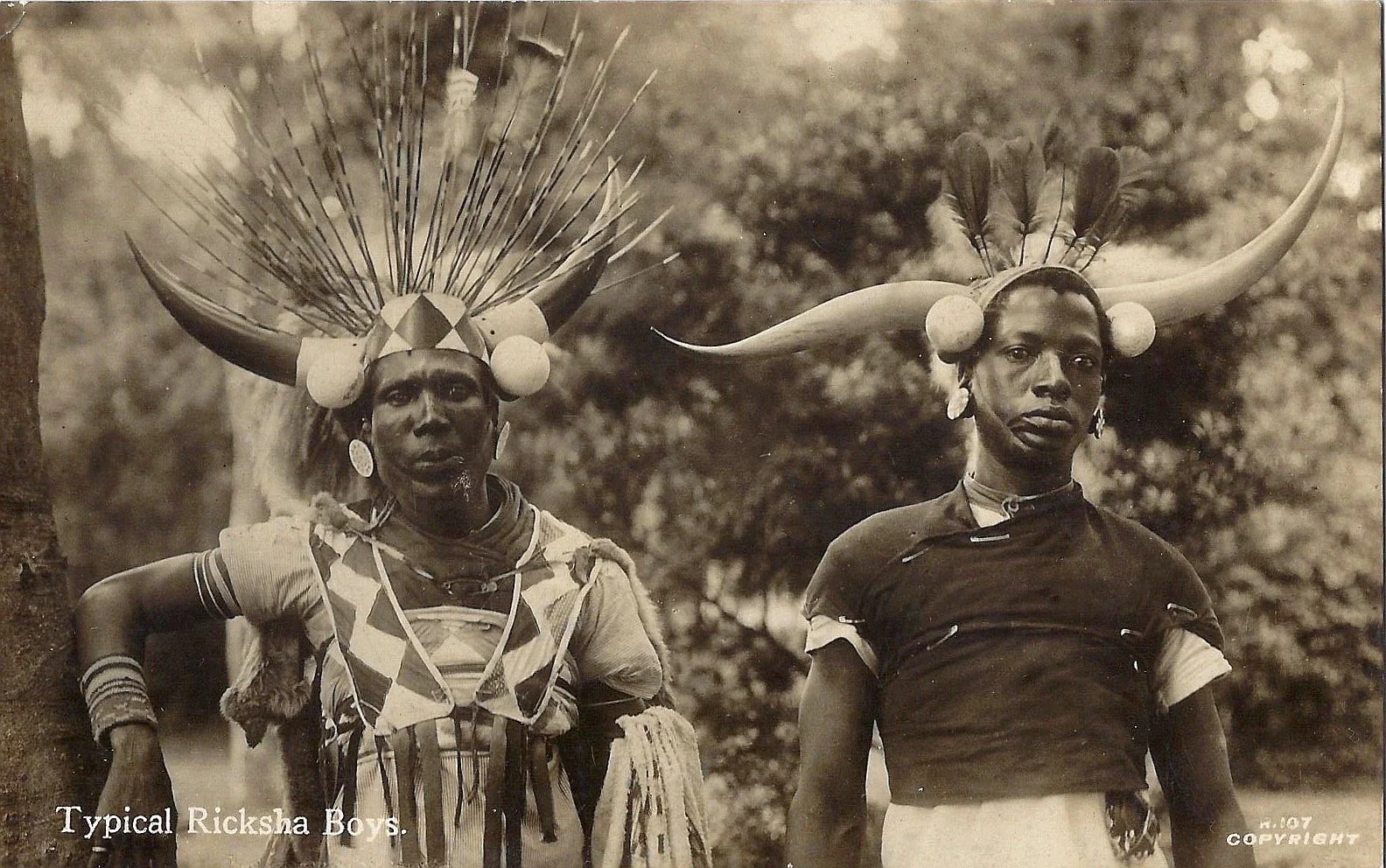
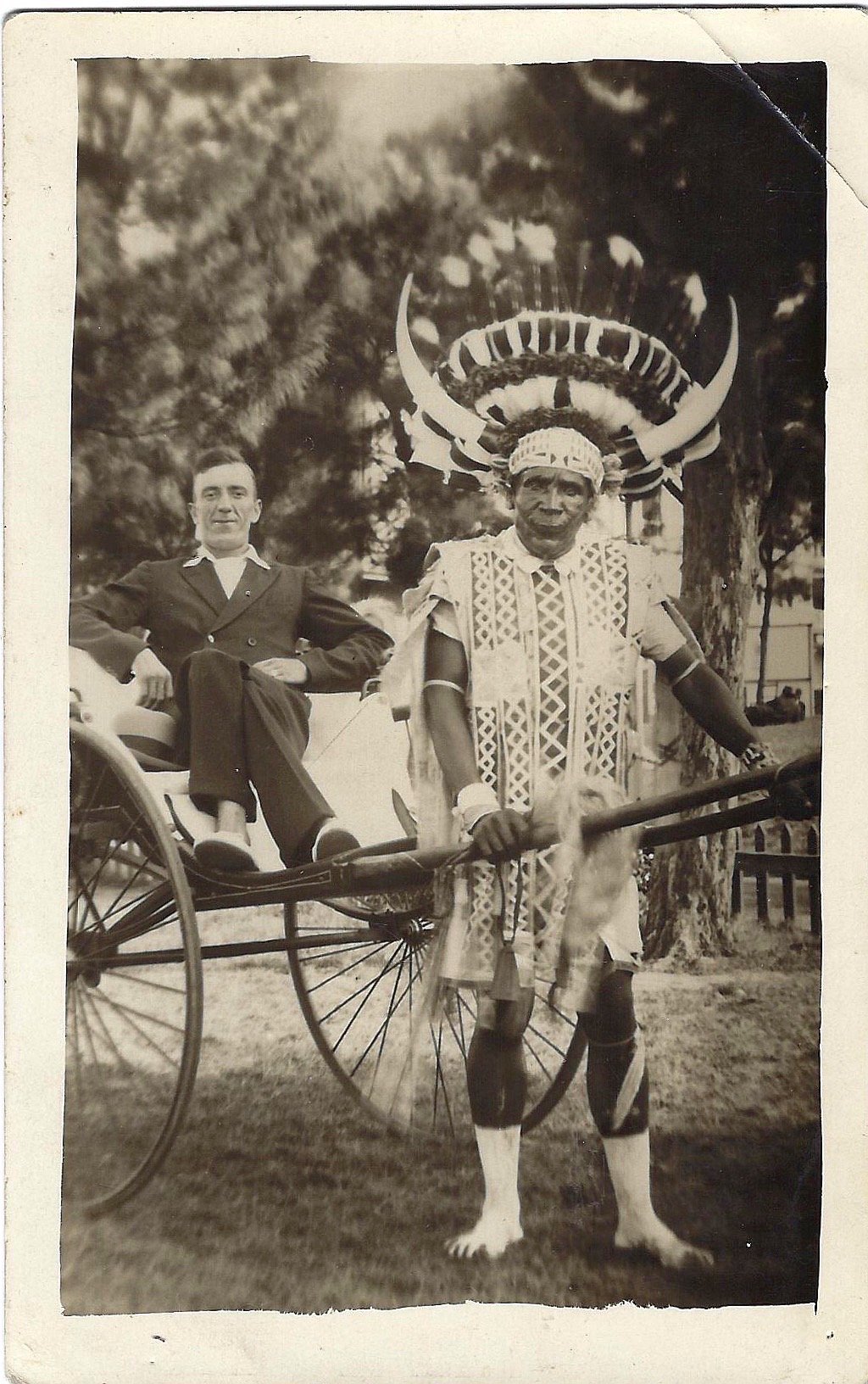
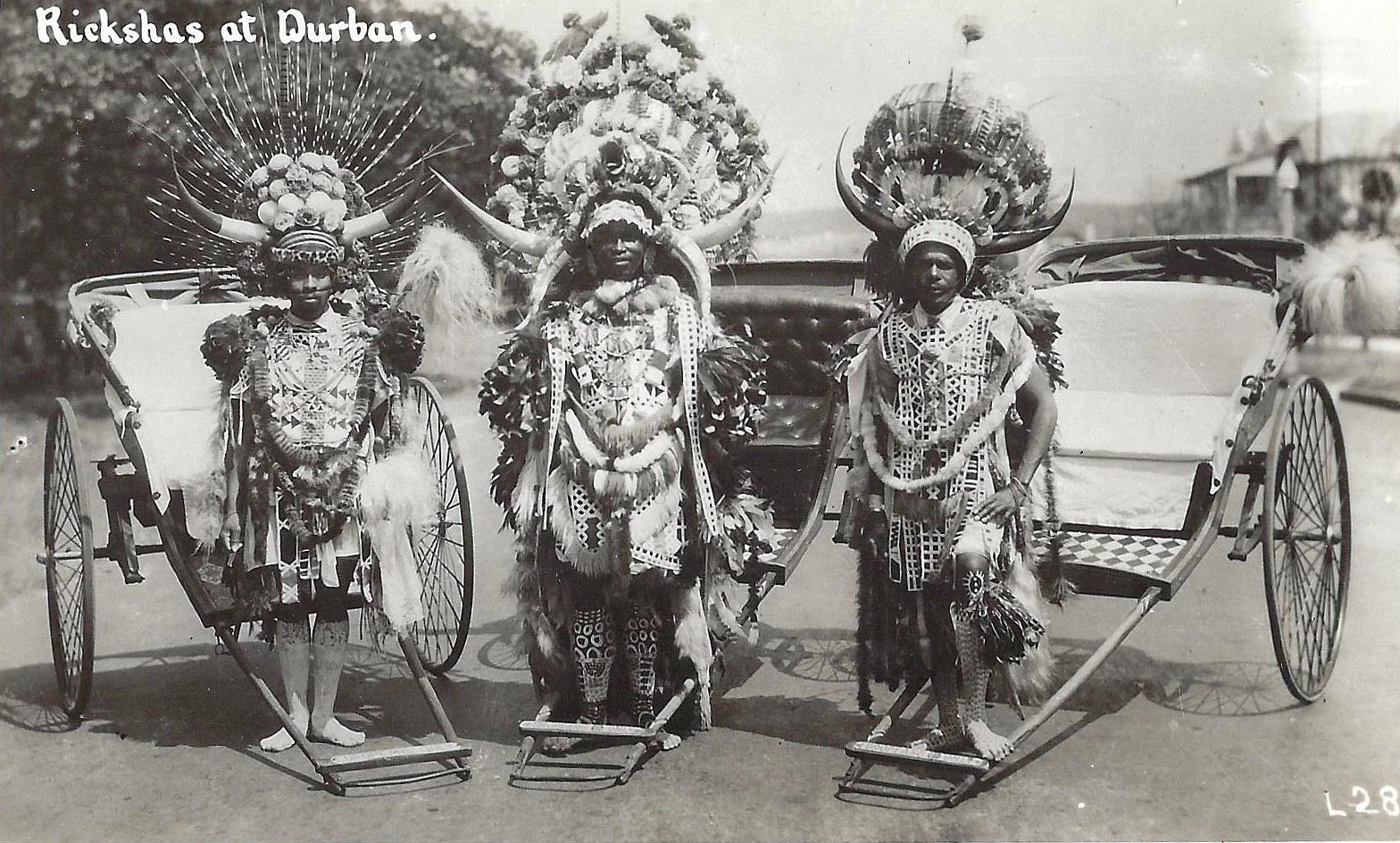
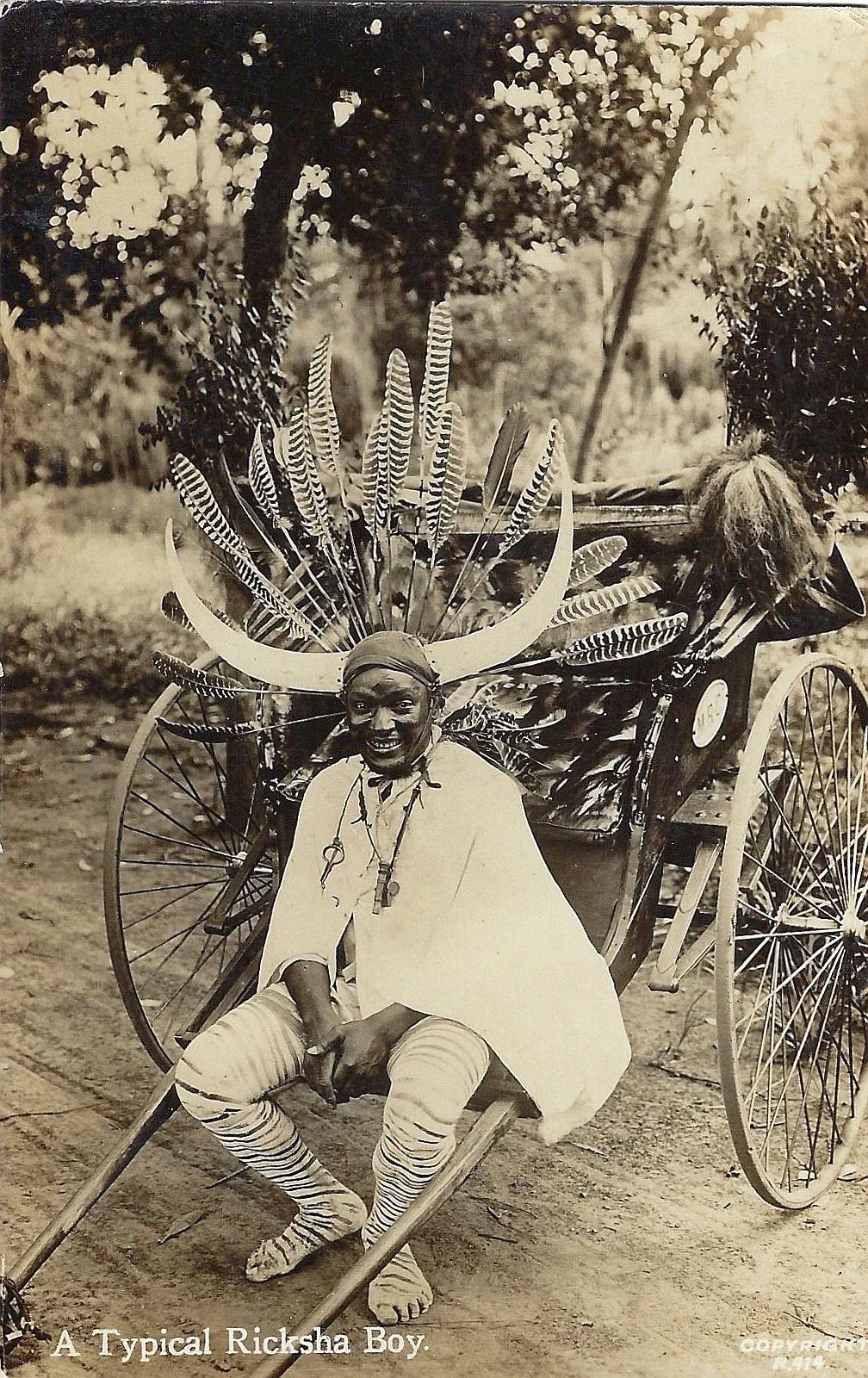
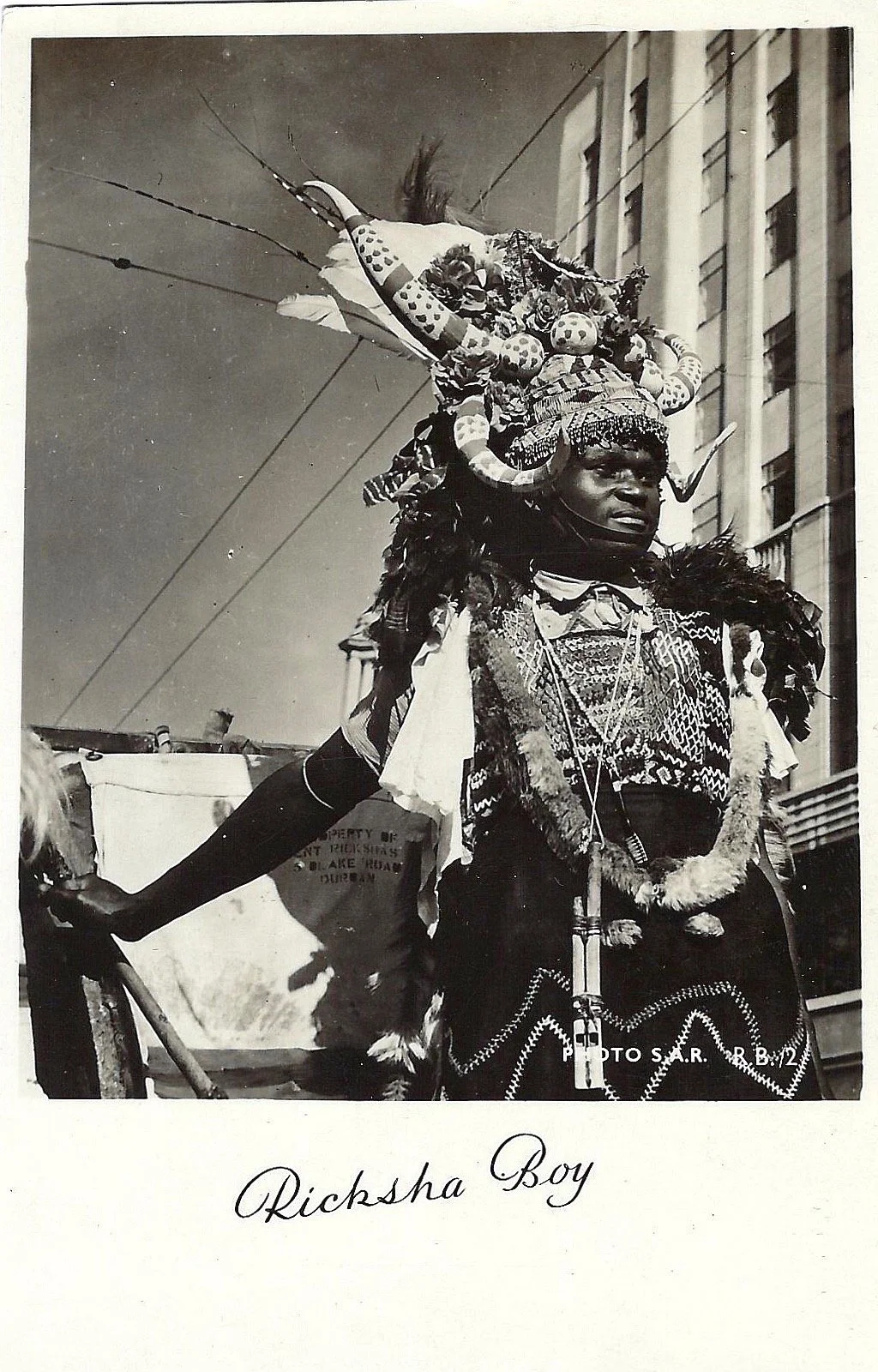
These photographs show the ubiquitous character of the “Ricksha boy” in colonial Durban. These men, typically of Zulu descent, are each clothed in elaborate bull-like headdresses and tribal costume, and were responsible for transporting British men and women around Durban by hand-pulled carriage, otherwise known as the “rickshaw.” The images show the wide range of dress worn by these hard-working men, from outfits as simple as a feather-capped horns accenting a polo-clad man, to what appears to be military-style regalia. While the photographs highlight the dress and masculinity of the ricksha boys, in the background can be seen the direct results of British colonialism, including railway-lines, automobiles, and white men and women enjoying the fruits of African labor.
The occupation of the “Ricksha boy” is a role reflective of the British empire’s global reach, and shows how Asian influence was forced upon South Africa by the colonial state. After having been invented in Japan in the late 1860s, the rickshaw was imported to the city of Durban in 1892 by sugar baron Sir Marshall Campbell, to “alleviate transport shortages” and encourage “locals to become self-employed pullers.” The rickshaw was known in Durban as “amahashi (horse) by the local Zulu people,” who quickly “grabbed the opportunity and became” rickshaw pullers at the docks and train-stations. These men “ferried goods and business people speedily…and the Europeans wives in long frocks, away from muddy streets back to the cool verandahs of Berea where they lived.” By the early years of the twentieth century, there were well over twenty-thousand registered rickshaw pullers in Durban. Seemingly in an effort to distinguish themselves as a unique and reliable professional class, by the 1910s, these men first wore “sets of horns,” and then, identifying with the “strength and ferocity of the bull” as both a marketing ploy and a point of pride, they started to wear “massed feathers (isiyaya) in the style of Zulu warriors, increasing a wearers’ imposing height and stature.”
Sources Consulted: “Rickshaws, costume, and Zulu people,” at TribalNow online.
Printed in England and South Africa. Circa 1920.
9 real-photo postcards, measuring approx. 5.5” x 3.5”. 2 captioned in ink at versos, rest apparently unused. CONDITION: Very good, some silvering to images at edges, minimal toning, all cards slightly curled. worn by stoic carriage-pullers.
An evocative representation of the use of Asian transportation devices among the British in early twentieth century South Africa.
These photographs show the ubiquitous character of the “Ricksha boy” in colonial Durban. These men, typically of Zulu descent, are each clothed in elaborate bull-like headdresses and tribal costume, and were responsible for transporting British men and women around Durban by hand-pulled carriage, otherwise known as the “rickshaw.” The images show the wide range of dress worn by these hard-working men, from outfits as simple as a feather-capped horns accenting a polo-clad man, to what appears to be military-style regalia. While the photographs highlight the dress and masculinity of the ricksha boys, in the background can be seen the direct results of British colonialism, including railway-lines, automobiles, and white men and women enjoying the fruits of African labor.
The occupation of the “Ricksha boy” is a role reflective of the British empire’s global reach, and shows how Asian influence was forced upon South Africa by the colonial state. After having been invented in Japan in the late 1860s, the rickshaw was imported to the city of Durban in 1892 by sugar baron Sir Marshall Campbell, to “alleviate transport shortages” and encourage “locals to become self-employed pullers.” The rickshaw was known in Durban as “amahashi (horse) by the local Zulu people,” who quickly “grabbed the opportunity and became” rickshaw pullers at the docks and train-stations. These men “ferried goods and business people speedily…and the Europeans wives in long frocks, away from muddy streets back to the cool verandahs of Berea where they lived.” By the early years of the twentieth century, there were well over twenty-thousand registered rickshaw pullers in Durban. Seemingly in an effort to distinguish themselves as a unique and reliable professional class, by the 1910s, these men first wore “sets of horns,” and then, identifying with the “strength and ferocity of the bull” as both a marketing ploy and a point of pride, they started to wear “massed feathers (isiyaya) in the style of Zulu warriors, increasing a wearers’ imposing height and stature.”
Sources Consulted: “Rickshaws, costume, and Zulu people,” at TribalNow online.
![Paul Oberst, photog. [Studio portrait of children in an oriental rug store].](https://images.squarespace-cdn.com/content/v1/687efeb0f3827b1e917a0b60/77315bff-97b4-43e3-803d-d55c73f26b9a/OberstChildRugmakersPhotoScn.jpg)