Occult Research Society: Room 415—Chicago-Clark Building, 800 North Clark St. Chicago. 1921.
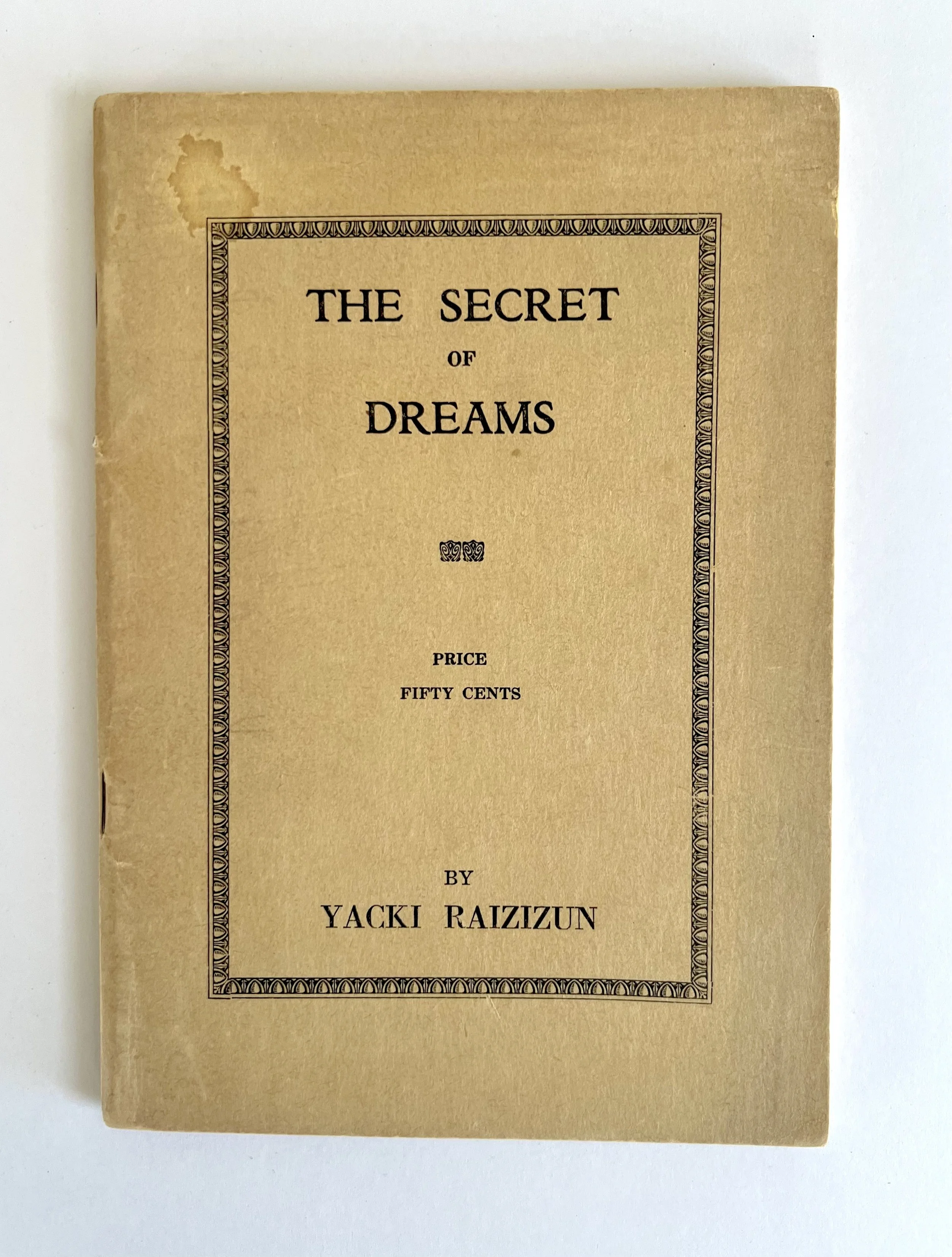
Staple-bound wrappers. 42 pp., 2 pgs. of pub. ads. at rear. CONDITION: Very good, wrappers toned, slight staining to front wrapper.
A scarce early volume by the first self-proclaimed “occult” teacher from South Asia, serving as a metaphysically-inflected interpretation of our dream-life, and being a rather imaginative take on our capacity for astral projection.
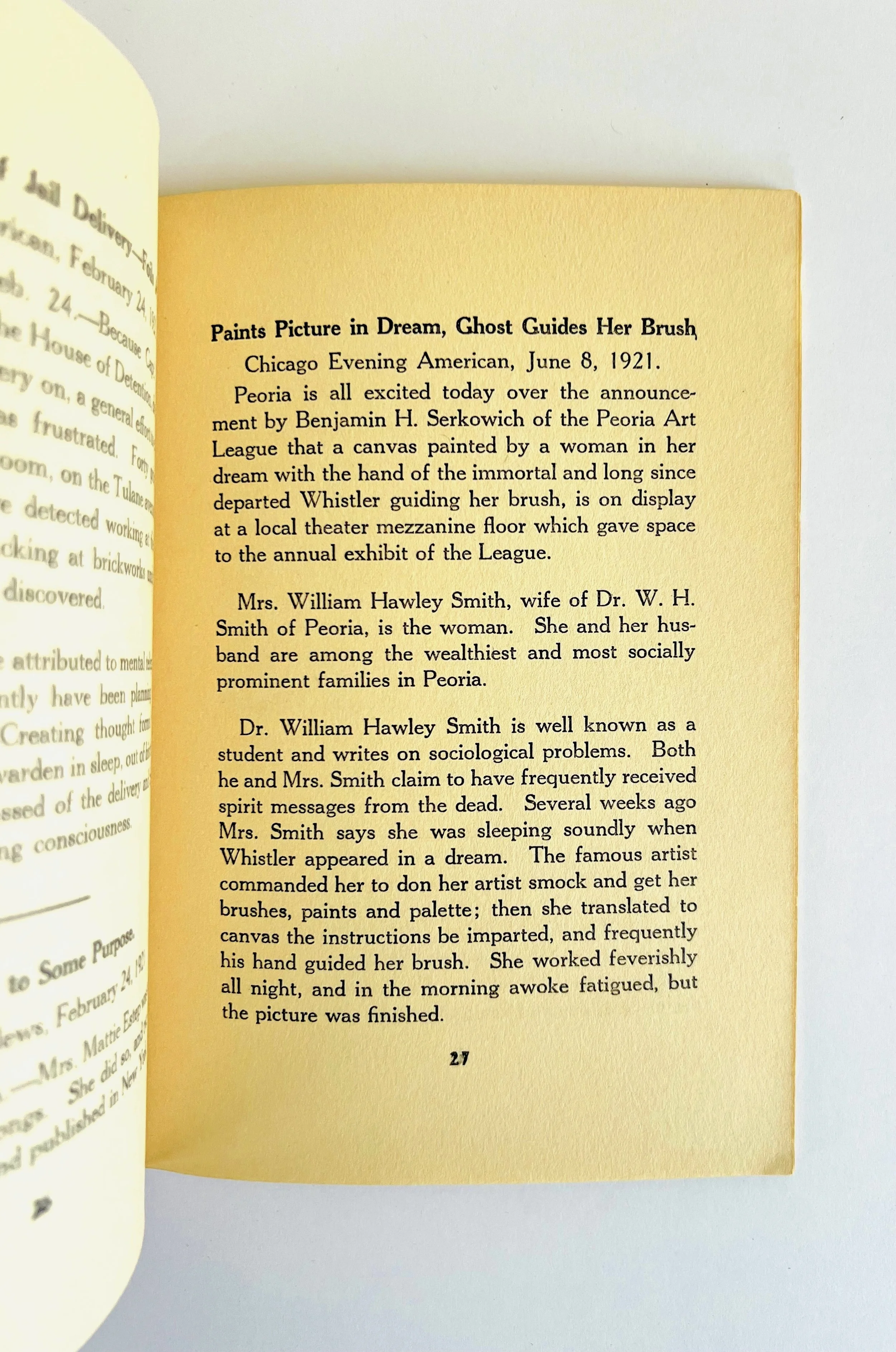
Through describing “Symbolic Dreams,” “Subconscious Memory,” “Varieties of Dreams,” “Telepathic Dreams,” and “How to Evolve the Larger Consciousness,” Raizizun makes a compelling intervention into the early twentieth century fascination with the Freudian Unconscious. Following Rene Descarte’s dualistic theory of consciousness, Raizizun declares that “dreams afford a separation of soul and body. As soon as the senses become torpid, the inner man withdraws from the outer. There are three...ways which afford this separation. First, natural sleep. Second, induced sleep, such as hypnotism, mesmerism or trance. Third, death.” Parodying, perhaps, the discourse of Enlightenment thought, Raizizun claims that it is in sleep, or its induced states, that we can access the “Astral world,” which “is here and now, interpenetrating the physical.” Raizizun then asserts that every person possesses an “astral body,” which is “the body of emotions and desires” that influences, and is influenced by, our physical and mental states. The text thus details the means by which Raizizun recommends we develop sufficient “clairvoyant vision” to access the power of the subtler material planes, in addition to numerous testimonials that corroborate Raizizun’s theory. Quotations are drawn from contemporary newspapers as well as Camille Flammarion and sayings of the Buddha.
Yacki Raizizun (1893–1966) was a Bombay-born itinerant occult lecturer who taught in the Chicago area between the two World Wars, before becoming a “licensed” naturopath in New Mexico during the postwar period. Prior to his arrival in America in the early 1920s, Raizizun had “traveled around the world... studying and lecturing.” His father was “a native of India, and his mother English and French from the Island of Corsica. At an early age he moved with his family to Sydney, Australia, where they made their home...He is a graduate of Amherst college in England, where he was...a teacher of philosophy for five years.” Newspapers from March 1924 indicate that Raizizun was the founder and “president of the Occult Research Society of Chicago,” and that he began his occult career soon after. He gave just over a hundred lectures on spiritual, psychological, and New Thought topics until 1937, before falling off the swami circuit and pursuing a fruitful career as a quack-medic homeopath in the southwest.
OCLC records no physical holdings, with the digital scan on Project Gutenberg differing substantially from the text in this volume. We have handled placed a variant state of this 1921 publication at Hamilton College. That copy was printed on glossier paper, and with a front wrapper that mirrors the title page of our present copy. We presume that the present copy may have been the second edition/second state of the text.
Sources Consulted: Philip Deslippe, “The Swami Circuit: Mapping the Terrain of Early American Yoga,” Journal of Yoga Studies, 2018.
Occult Research Society: Room 415—Chicago-Clark Building, 800 North Clark St. Chicago. 1921.
Staple-bound wrappers. 42 pp., 2 pgs. of pub. ads. at rear. CONDITION: Very good, wrappers toned, slight staining to front wrapper.
A scarce early volume by the first self-proclaimed “occult” teacher from South Asia, serving as a metaphysically-inflected interpretation of our dream-life, and being a rather imaginative take on our capacity for astral projection.
Through describing “Symbolic Dreams,” “Subconscious Memory,” “Varieties of Dreams,” “Telepathic Dreams,” and “How to Evolve the Larger Consciousness,” Raizizun makes a compelling intervention into the early twentieth century fascination with the Freudian Unconscious. Following Rene Descarte’s dualistic theory of consciousness, Raizizun declares that “dreams afford a separation of soul and body. As soon as the senses become torpid, the inner man withdraws from the outer. There are three...ways which afford this separation. First, natural sleep. Second, induced sleep, such as hypnotism, mesmerism or trance. Third, death.” Parodying, perhaps, the discourse of Enlightenment thought, Raizizun claims that it is in sleep, or its induced states, that we can access the “Astral world,” which “is here and now, interpenetrating the physical.” Raizizun then asserts that every person possesses an “astral body,” which is “the body of emotions and desires” that influences, and is influenced by, our physical and mental states. The text thus details the means by which Raizizun recommends we develop sufficient “clairvoyant vision” to access the power of the subtler material planes, in addition to numerous testimonials that corroborate Raizizun’s theory. Quotations are drawn from contemporary newspapers as well as Camille Flammarion and sayings of the Buddha.
Yacki Raizizun (1893–1966) was a Bombay-born itinerant occult lecturer who taught in the Chicago area between the two World Wars, before becoming a “licensed” naturopath in New Mexico during the postwar period. Prior to his arrival in America in the early 1920s, Raizizun had “traveled around the world... studying and lecturing.” His father was “a native of India, and his mother English and French from the Island of Corsica. At an early age he moved with his family to Sydney, Australia, where they made their home...He is a graduate of Amherst college in England, where he was...a teacher of philosophy for five years.” Newspapers from March 1924 indicate that Raizizun was the founder and “president of the Occult Research Society of Chicago,” and that he began his occult career soon after. He gave just over a hundred lectures on spiritual, psychological, and New Thought topics until 1937, before falling off the swami circuit and pursuing a fruitful career as a quack-medic homeopath in the southwest.
OCLC records no physical holdings, with the digital scan on Project Gutenberg differing substantially from the text in this volume. We have handled placed a variant state of this 1921 publication at Hamilton College. That copy was printed on glossier paper, and with a front wrapper that mirrors the title page of our present copy. We presume that the present copy may have been the second edition/second state of the text.
Sources Consulted: Philip Deslippe, “The Swami Circuit: Mapping the Terrain of Early American Yoga,” Journal of Yoga Studies, 2018.
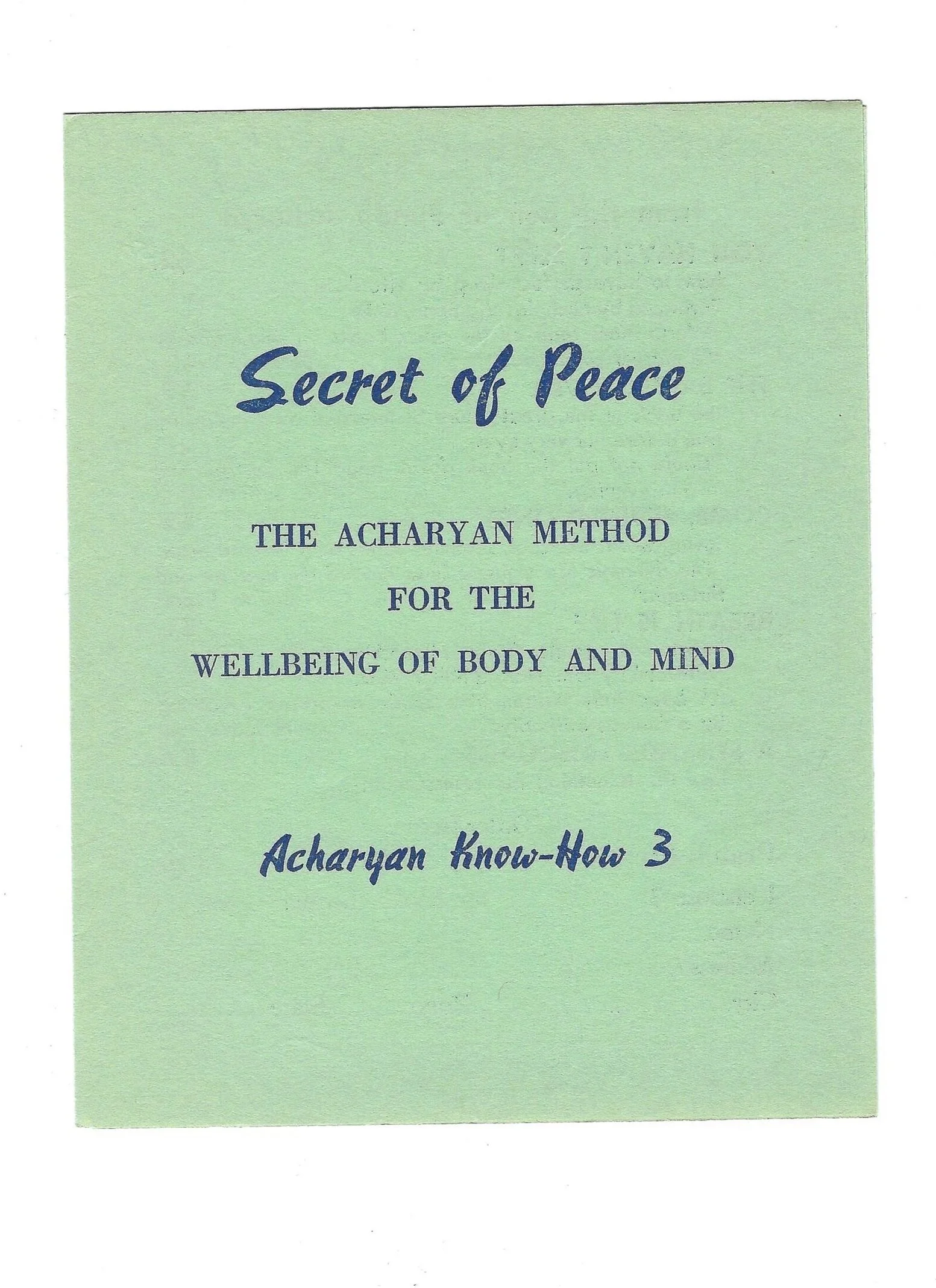
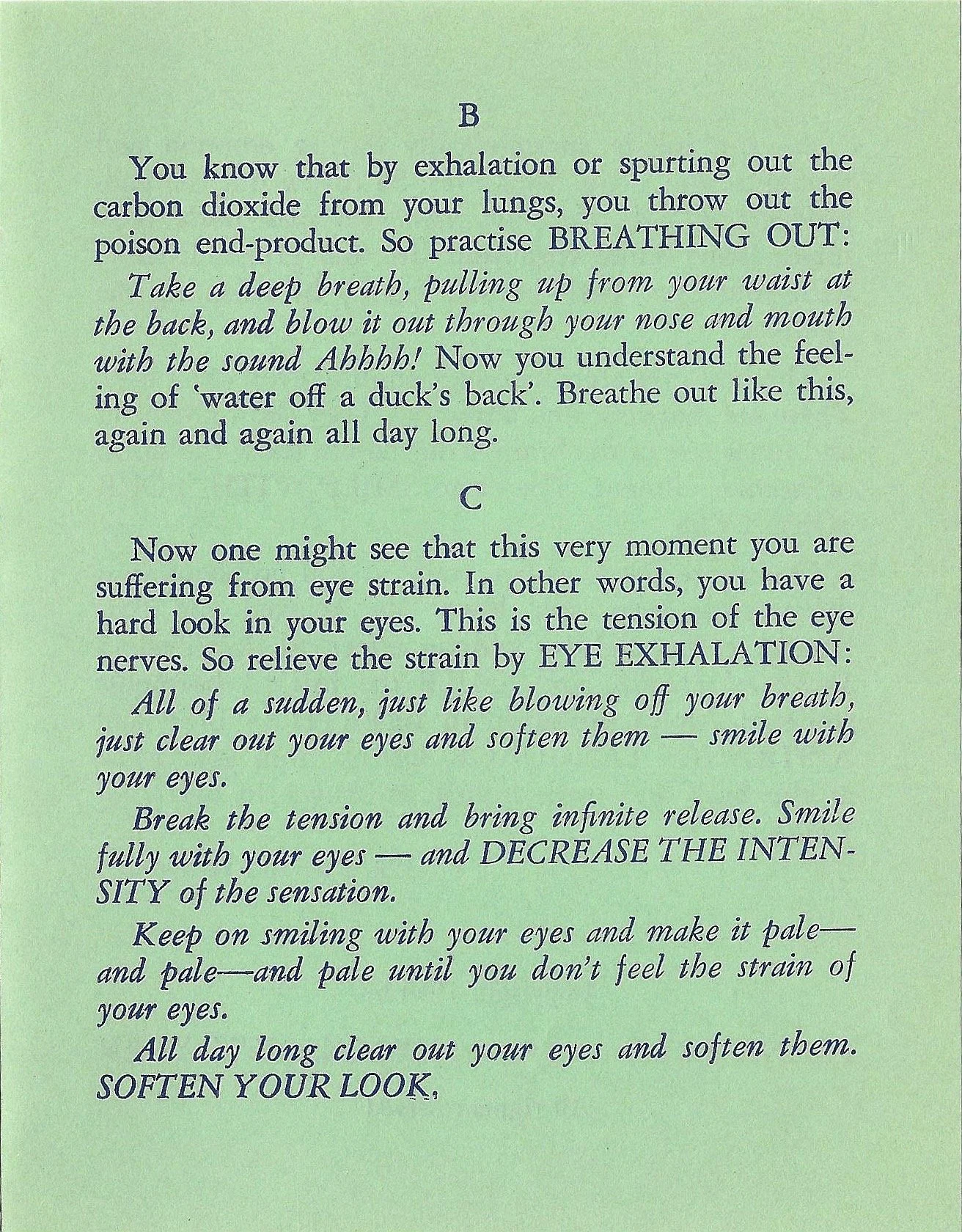
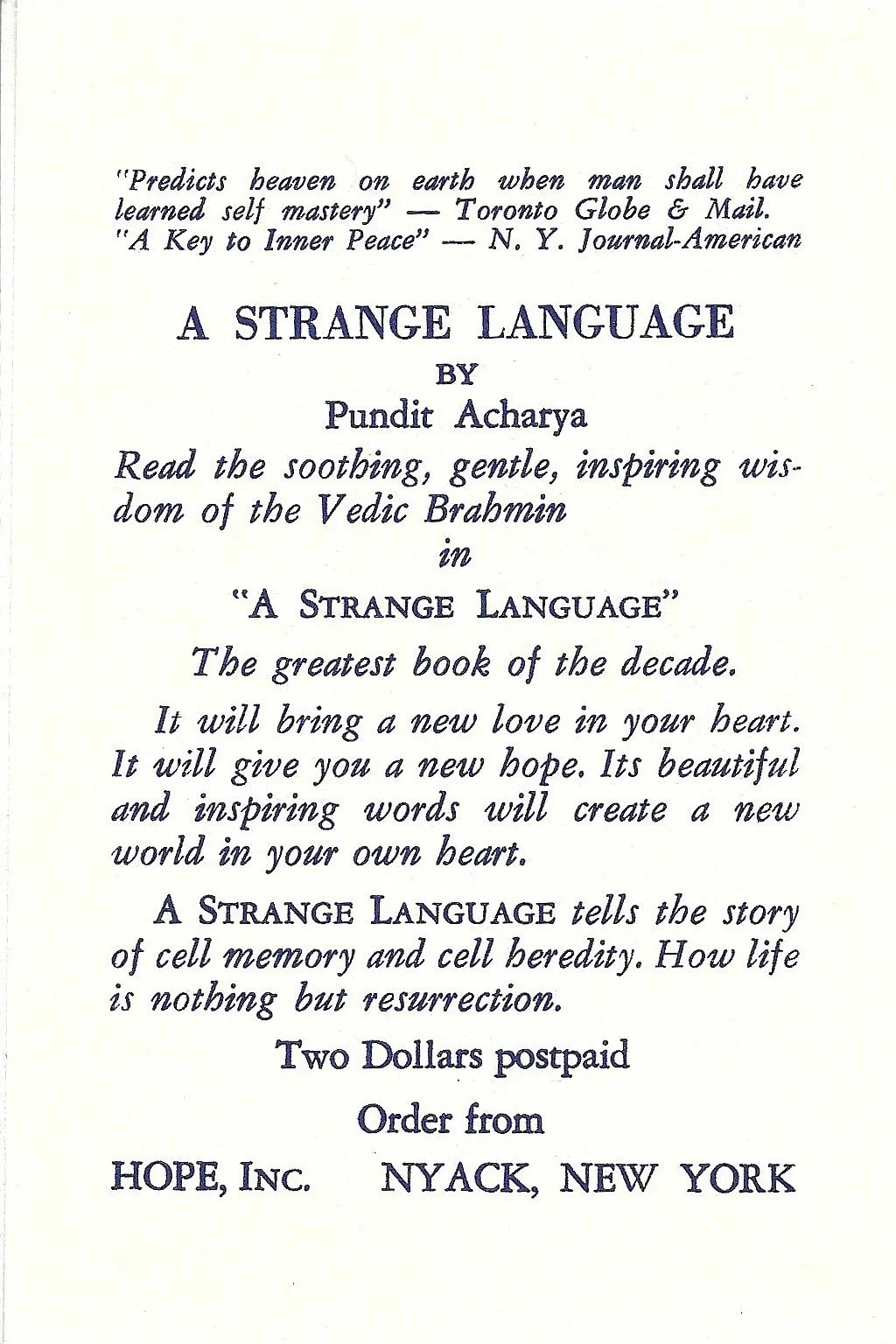
![Pundit Acharya. Studies in Neuro-Bio-Electronics: The Doctor’s Book of Yogas. Vol. 1 [with] Studies in Neuro-Bio-Electronics: Training of the Brain by the Brain. Vol. 2 [with 3 pieces of ephemera].](https://images.squarespace-cdn.com/content/v1/687efeb0f3827b1e917a0b60/d0e3a66c-eb7e-4867-afa4-03e5730ae75b/AcharyaElectronicsCover.jpeg)