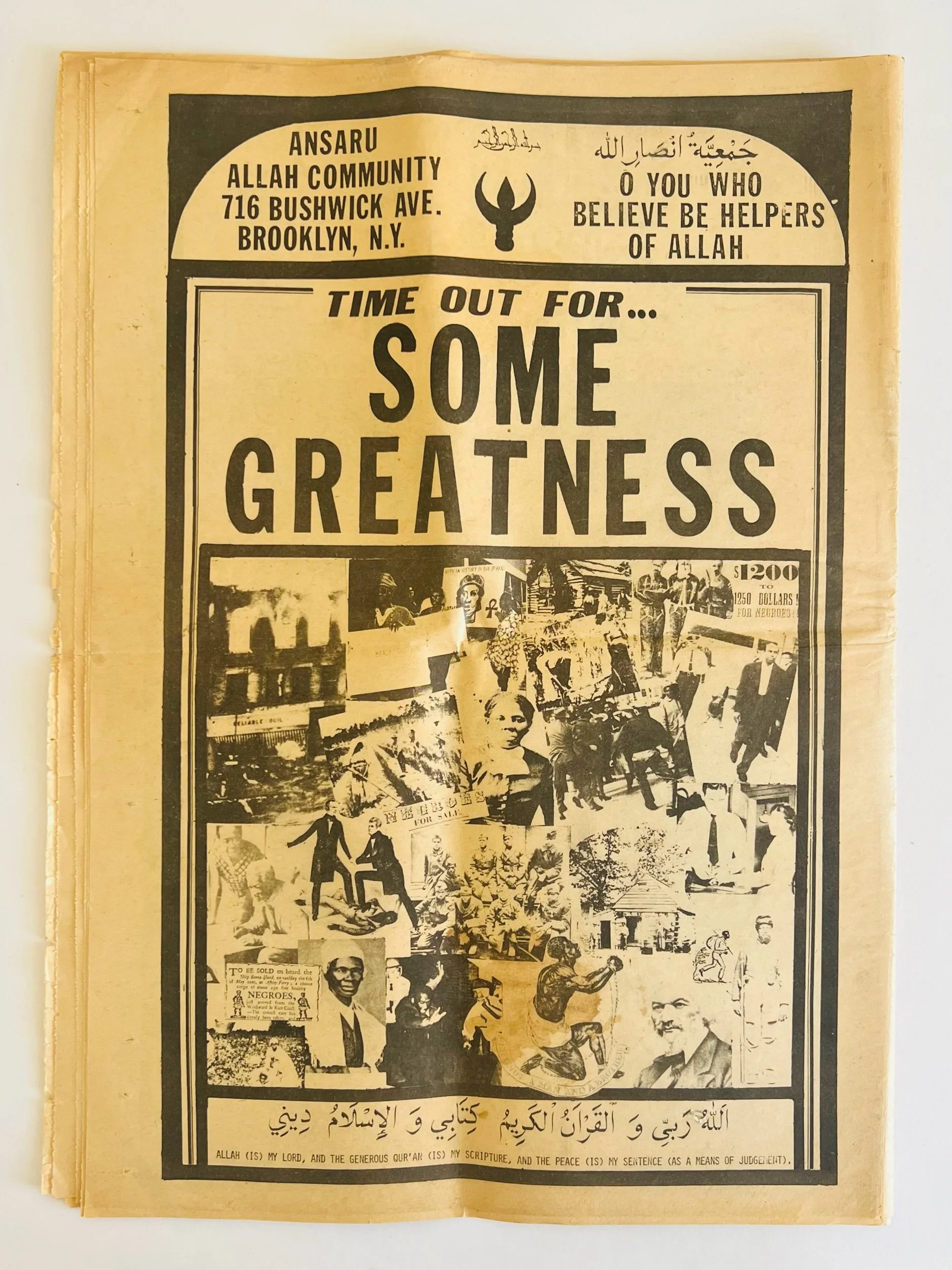
Dwight D. “Malachi” Z. York. Time out for Some Greatness.
Ansaru Allah Community: 716 Bushwick Ave., Brooklyn, N.Y. Circa 1975.
Tabloid-format newsprint. 18 pgs., illus. Sheets folded from right-to-left to imitate Arabic-language books. CONDITION: Good, horizontal and vertical folds, faint brown stain to five sheets not affecting legibility of text, short tears and creases to margins of last two sheets.
A splendid example of a major Black Muslim group’s marriage of nationalist politics with African American Islam, describing their principles, spiritual-political heroes, and fundraising efforts to establish a major masjid in Brooklyn.
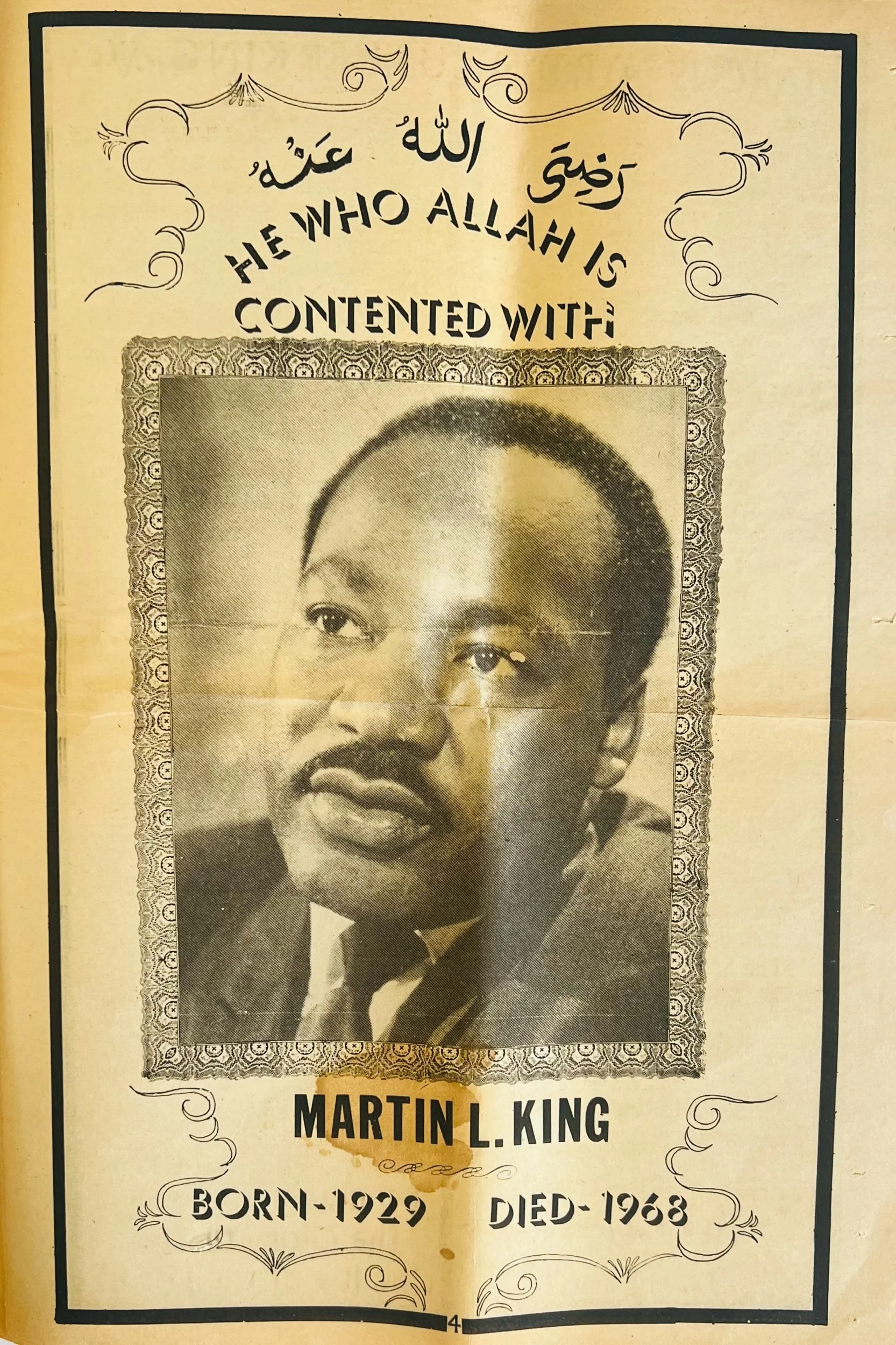
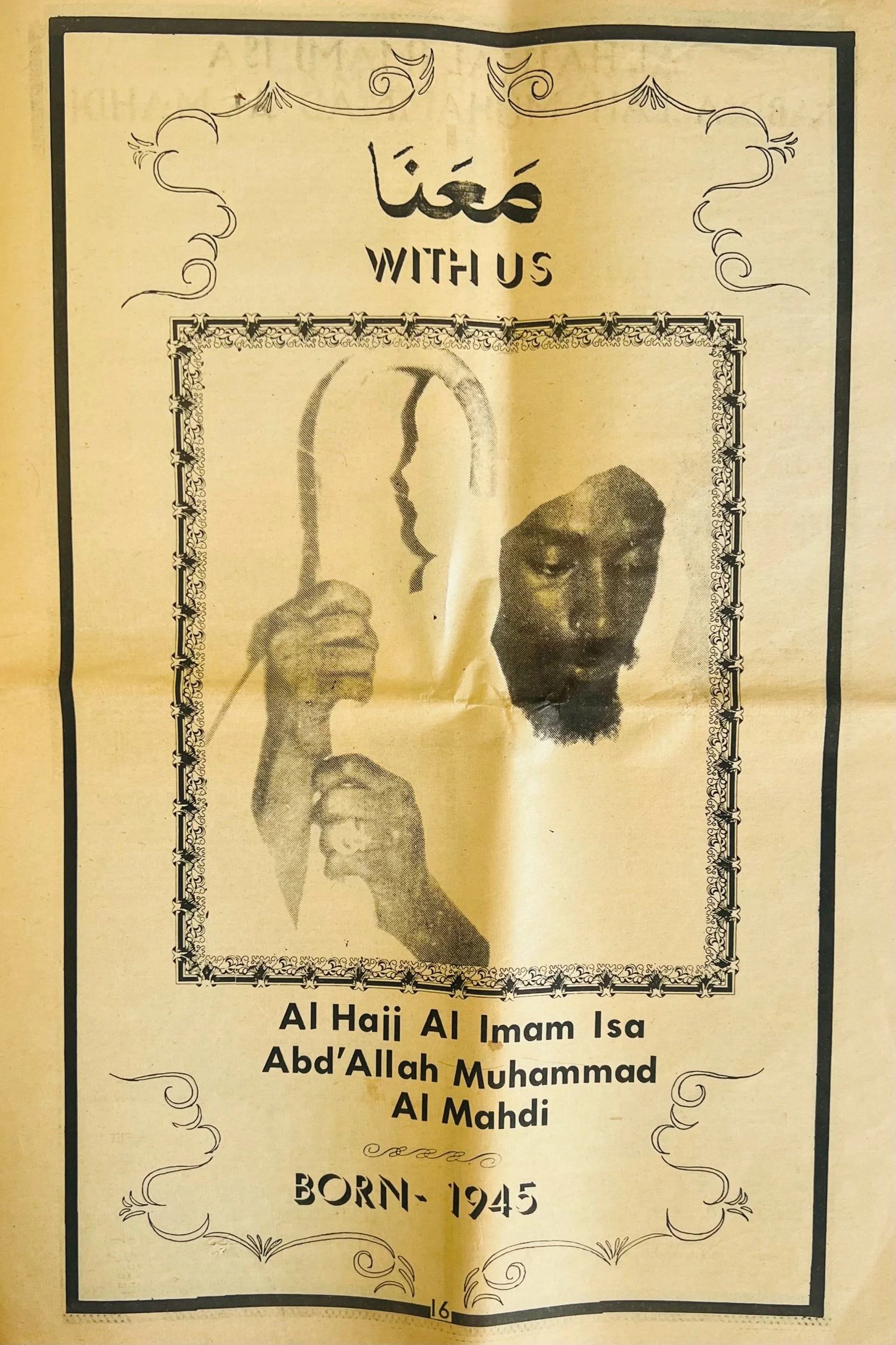
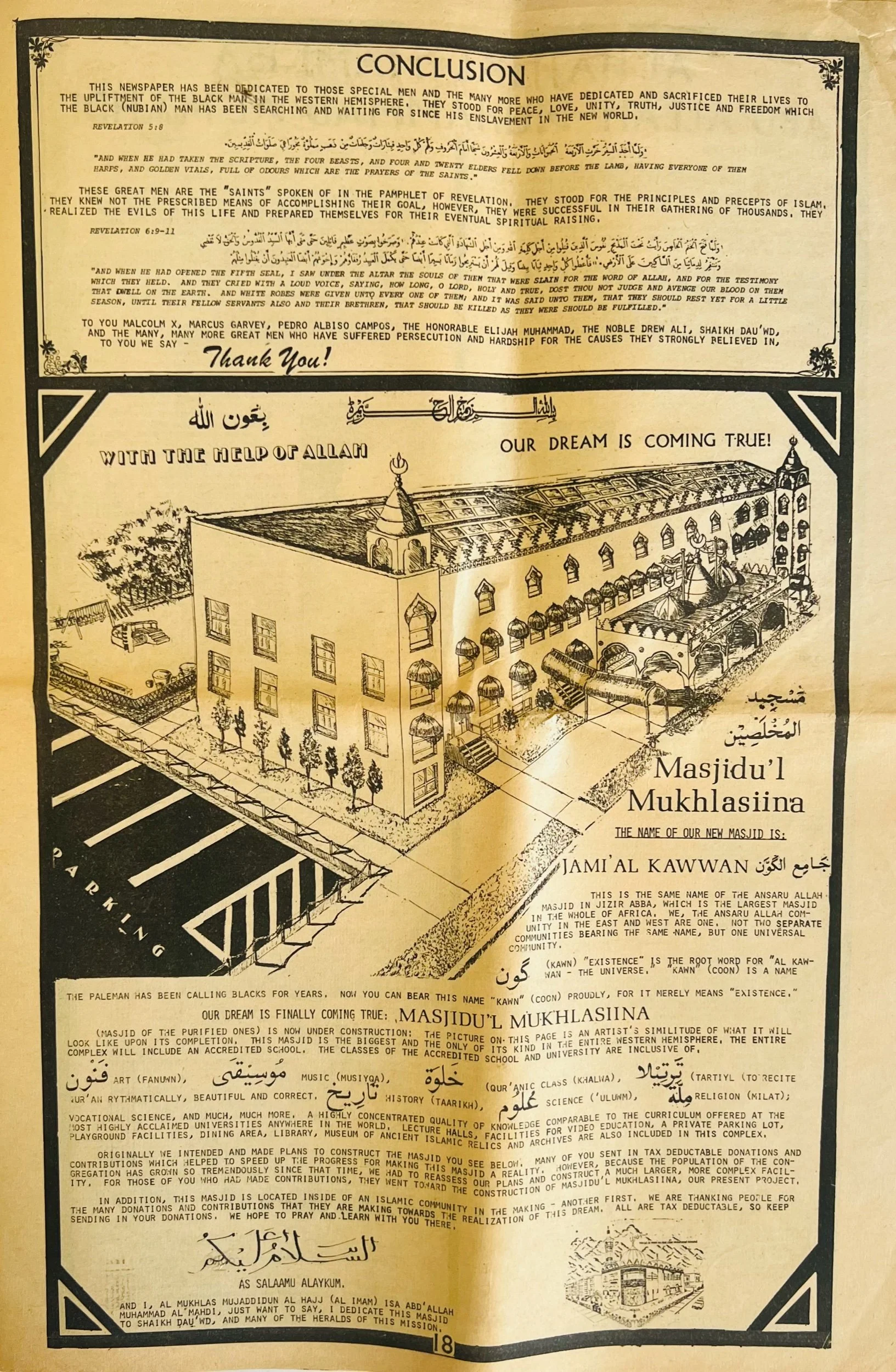
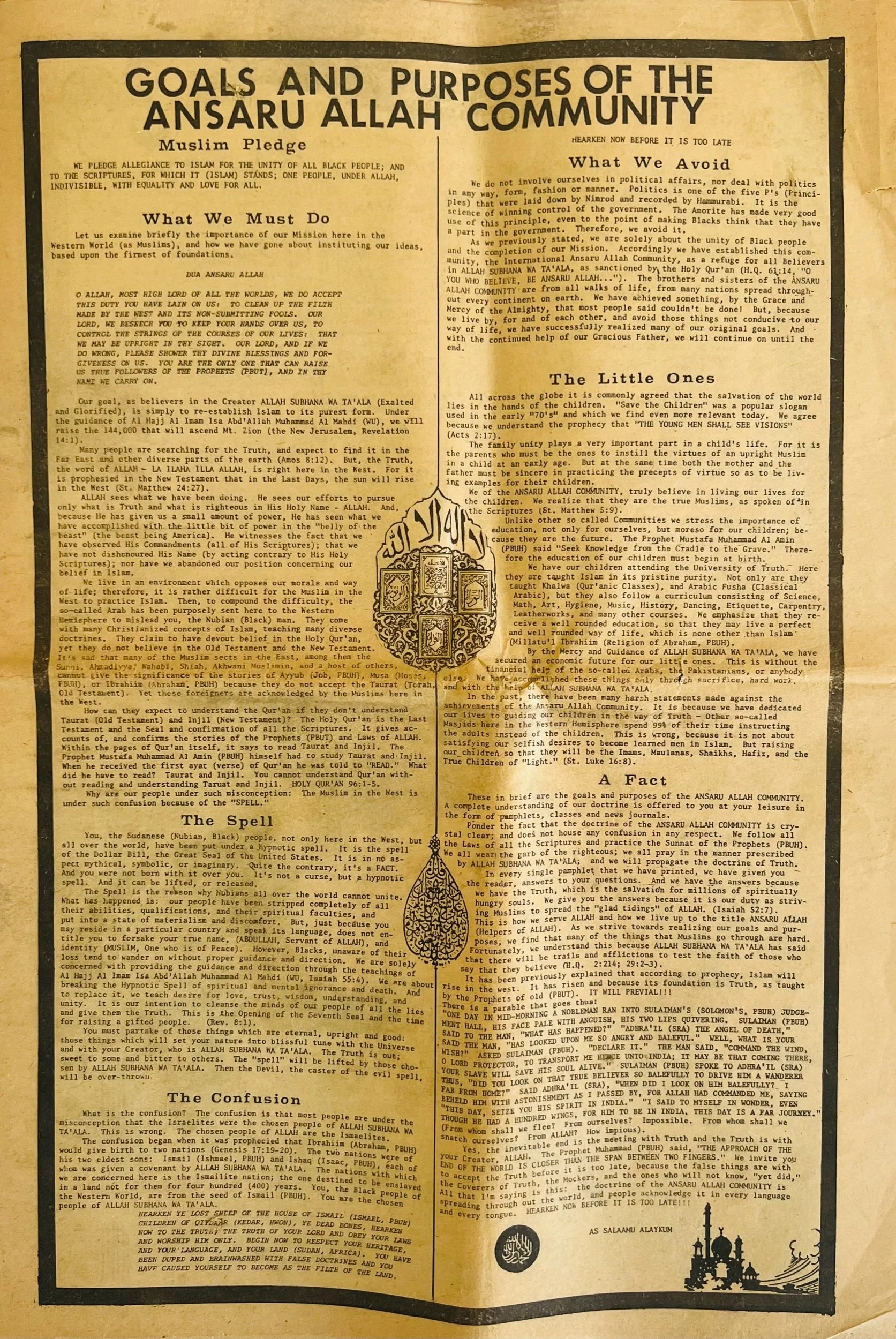
Written by the leader of the largest Black Muslim community in the late-twentieth century Brooklyn, this newspaper chiefly consists of laudatory biographies of “those special men…who have…sacrificed their lives to the upliftment of the Black man in the western hemisphere.” Among these were such prominent Black Muslim figures as “Malcolm X, Marcus Garvey…the Honorable Elijah Muhammad, the Noble Drew Ali,” as well as Dr. Martin Luther King, Jr., and the Ansaru Allah community’s self-declared prophet, Al Hajj Al Imam Isa Abd’Allah Muhammad Al Mahdi, otherwise known as Dwight or “Malachi” York. Of particular interest to scholars of African American Islam is this paper’s advertisement for the “Masjidu’l Mukhlasiina,” a Muslim community center that was likely under construction in Bushwick, where the community had formed at the beginning of the 1970s. This Masjid was intended to be “an accredited school” and offered classes in “art…music…qur’anic class…vocational science” and much else besides. Concluding this paper is an outline of the “Goals and Purposes of the Ansaru Allah Community,” which includes a “Muslim Pledge” wherein the author writes that “we pledge allegiance to Islam for the Unity of all Black People; and to the Scriptures, for which…(Islam) stands; one people, under Allah, indivisible, with equality and love for all.”
The Ansaaru Allah Community (AAC), otherwise known as the Helpers of Allah, was one of several “African American Muslim movements to emerge out of the new, indigenous forms of Islam in America in the 1960s.” AAC members were easily identifiable by their garments: “men wore Sudanese robes and turbans, and the women wore long white gowns and burkas.” The community reached its highest following between 1973 and 1992, by which time it owned “a mosque, a large communal residence with a home school, a bookstore, two recording studios, several restaurants, a grocery store, and a laundromat” along and around Bushwick Avenue in Brooklyn.
OCLC locates one holding of this newspaper, at Hamilton College. We have placed significant collections of the Ansaru Allah Community’s publications at Cornell, Hamilton, and the New York Public Library.
Sources Consulted: Susan J. Palmer, “The Ansaru Allah Community,” 2021; Spencer Dew, The Aliites: Race and Law in the Religions of Noble Drew Ali (Chicago, 2019).
Ansaru Allah Community: 716 Bushwick Ave., Brooklyn, N.Y. Circa 1975.
Tabloid-format newsprint. 18 pgs., illus. Sheets folded from right-to-left to imitate Arabic-language books. CONDITION: Good, horizontal and vertical folds, faint brown stain to five sheets not affecting legibility of text, short tears and creases to margins of last two sheets.
A splendid example of a major Black Muslim group’s marriage of nationalist politics with African American Islam, describing their principles, spiritual-political heroes, and fundraising efforts to establish a major masjid in Brooklyn.
Written by the leader of the largest Black Muslim community in the late-twentieth century Brooklyn, this newspaper chiefly consists of laudatory biographies of “those special men…who have…sacrificed their lives to the upliftment of the Black man in the western hemisphere.” Among these were such prominent Black Muslim figures as “Malcolm X, Marcus Garvey…the Honorable Elijah Muhammad, the Noble Drew Ali,” as well as Dr. Martin Luther King, Jr., and the Ansaru Allah community’s self-declared prophet, Al Hajj Al Imam Isa Abd’Allah Muhammad Al Mahdi, otherwise known as Dwight or “Malachi” York. Of particular interest to scholars of African American Islam is this paper’s advertisement for the “Masjidu’l Mukhlasiina,” a Muslim community center that was likely under construction in Bushwick, where the community had formed at the beginning of the 1970s. This Masjid was intended to be “an accredited school” and offered classes in “art…music…qur’anic class…vocational science” and much else besides. Concluding this paper is an outline of the “Goals and Purposes of the Ansaru Allah Community,” which includes a “Muslim Pledge” wherein the author writes that “we pledge allegiance to Islam for the Unity of all Black People; and to the Scriptures, for which…(Islam) stands; one people, under Allah, indivisible, with equality and love for all.”
The Ansaaru Allah Community (AAC), otherwise known as the Helpers of Allah, was one of several “African American Muslim movements to emerge out of the new, indigenous forms of Islam in America in the 1960s.” AAC members were easily identifiable by their garments: “men wore Sudanese robes and turbans, and the women wore long white gowns and burkas.” The community reached its highest following between 1973 and 1992, by which time it owned “a mosque, a large communal residence with a home school, a bookstore, two recording studios, several restaurants, a grocery store, and a laundromat” along and around Bushwick Avenue in Brooklyn.
OCLC locates one holding of this newspaper, at Hamilton College. We have placed significant collections of the Ansaru Allah Community’s publications at Cornell, Hamilton, and the New York Public Library.
Sources Consulted: Susan J. Palmer, “The Ansaru Allah Community,” 2021; Spencer Dew, The Aliites: Race and Law in the Religions of Noble Drew Ali (Chicago, 2019).